
|
Text: |
Chakrit Samithinan |
|
Pictures: |
Chakrit Samithinan |


Falcon Strike is the name of an annual air exercise between the teams of the Royal Thai Air Force (RTAF) and the People’s Liberation Army Air Force (PLAAF). It usually takes place in the month of July or early August at the RTAF airbase of wing 23 in Udon Thani (Northeastern Thailand). It was first held in the year 2015 and has since been held every year with the exception of 2017 and the two Covid years in 2021 and 2022. Both countries describe the purpose of the exercise as “To enhance the technical capabilities of the participating troops and deepening mutual trust and practical cooperation”. This exercise underscores the expanding defense partnership between the PLAAF and the RTAF at a time when Thailand has been reducing the dependence of weapons purchases from the USA. A recent example of this is RTAF’s decision in July 2025 to decline the offer of the US to supply new F-16 aircrafts to replace the fleet of aging F-16 aircrafts in favor of the Swedish Gripen E aircraft 4 examples of which will be supplied to Thailand over the next 4 years. Changing global realities force Thailand to move away from putting all eggs in only one basket (USA), and the result is a sharp increase in weapon purchases mainly from China, among them submarines, tanks and frigates.
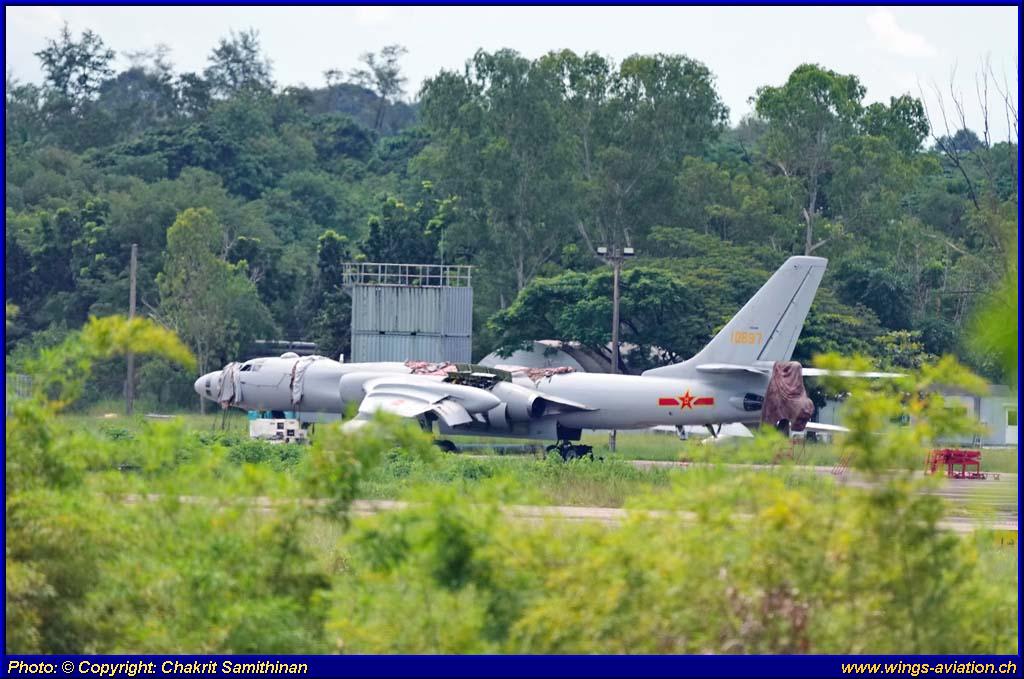

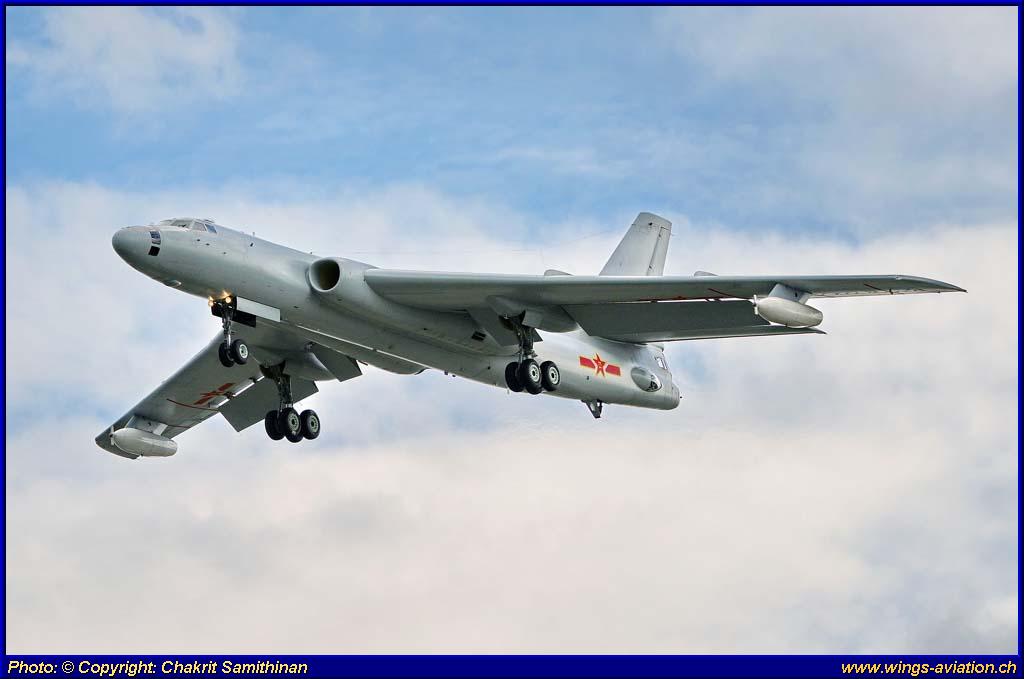


Xian HY-6U #10897 (Picture courtesy Chakrit Samithinan)
Xian HY-6U #10897 (Picture courtesy Chakrit Samithinan)
Xian HY-6U #10897 (Picture courtesy Chakrit Samithinan)
Xian HY-6U #10897 (Picture courtesy Chakrit Samithinan)
Xian HY-6U #10897 (Picture courtesy Chakrit Samithinan)
The most recent edition of Falcon Strike was originally scheduled for the first two weeks of August and then postponed and shortened to the period 18th to 25th September 2025 at the request of China due to the border conflict between Cambodia and Thailand in July/August. China has considerable interests in Cambodia and did not want to be seen exercising with Thailand at the height of the conflict. However, these annual exercises provide a very welcome opportunity for the PLAAF to compare their aircrafts and skills of their pilots with pilots using western aircraft technology (Gripen, Alpha Jet). For this reason, the PLAAF did not want to cancel the exercise for 2025 outright as it might have spelled the end of Falcon Strike. Although secret until the day of their arrival, the aircrafts actually deployed by the PLAAF for Falcon Strike 2025 were 6 x Chengdu J-10C/AS, 2 x Shenyang J-11BGH/BGS, 2 x Xian JH-7A, 1 x Shaanxi KJ-500 AEW&C, 1 x Xian HY-6U tanker, 1 x Mil Mi-17V5 and 1 x Shaanxi Y-9LG (not seen to be participating in the exercise).
The aircraft shown among the photos of 2025 include an example of the Shaanxi Y-9LG aircraft in use during last year’s Falcon Strike exercise. Among the aircrafts of the PLAAF, this year’s main interest by spotters and photographers was clearly the Xian HY-6U tanker, a Chinese derivative of the 60 years old Russian Tu-16 Badger. The writer even met a spotter from China who came all the way to Thailand to photograph the Y-6 tanker which means that even in China, the secrecy displayed around the PLAAF’s aircrafts means very few photo opportunities in their home country. Utmost secrecy and tight security was on display throughout the exercise and the press was not invited to the opening or closing ceremony. Thus, no independent photographer was able to take pictures inside the base and the writer had to resort to a search of some viewing points within the city limits of Udonthanee where photos of take-offs and landings at a distance were possible.
From the side of the RTAF, the following aircrafts participated: 5 x Saab Gripen A/B, 3 x Dassault Alphajet and 1 x Airbus H225 helicopter. The question why the RTAF is not using the F-16 aircrafts in Falcon Strike can be answered by the understandable attitude of the Americans not to allow Thailand to use their F-16 fleet in an exercise with the Chinese.


Dassault Alpha Jet Th #23122 (Picture courtesy Chakrit Samithinan)
Dassault Alpha Jet Th #23115 (Picture courtesy Chakrit Samithinan)
Dassault Alpha Jet Th #23114 (Picture courtesy Chakrit Samithinan)
Dassault Alpha Jet Th #23115 (Picture courtesy Chakrit Samithinan)
Dassault Alpha Jet Th #23115 (Picture courtesy Chakrit Samithinan)


Airbus H225 # 20309 (Picture courtesy Chakrit Samithinan)
Saab Gripen #70107 (Picture courtesy Chakrit Samithinan)
Saab Gripen #70105 (Picture courtesy Chakrit Samithinan)
Saab Gripen #70105 (Picture courtesy Chakrit Samithinan)
Saab Gripen #70105 (Picture courtesy Chakrit Samithinan)


Saab Gripen #70107 (Picture courtesy Chakrit Samithinan)
Saab Gripen #70107 (Picture courtesy Chakrit Samithinan)
Saab Gripen #70105 (Picture courtesy Chakrit Samithinan)
Saab Gripen #70112 (Picture courtesy Chakrit Samithinan)
Saab Gripen #70112 (Picture courtesy Chakrit Samithinan)
A significant deployment of Chinese aircrafts and personnel as well as ground-based air defense units was supported by 3 x Y-20 transport aircrafts which made 3 trips each at the beginning and at the end of the exercise. The fact that the photographer/writer who spent 6 days in Udon Thani in anticipation of twice daily exercises came away with only two halfday sessions (Friday and Monday mornings) to document this year’s exercise rises the question whether the huge deployment of aircrafts, personnel and ground equipment by the Chinese was at all worthwhile. However, when seen from the point of view that they probably did not want to break the tradition of annual air exercises with the RTAF, this massive deployment was justified.
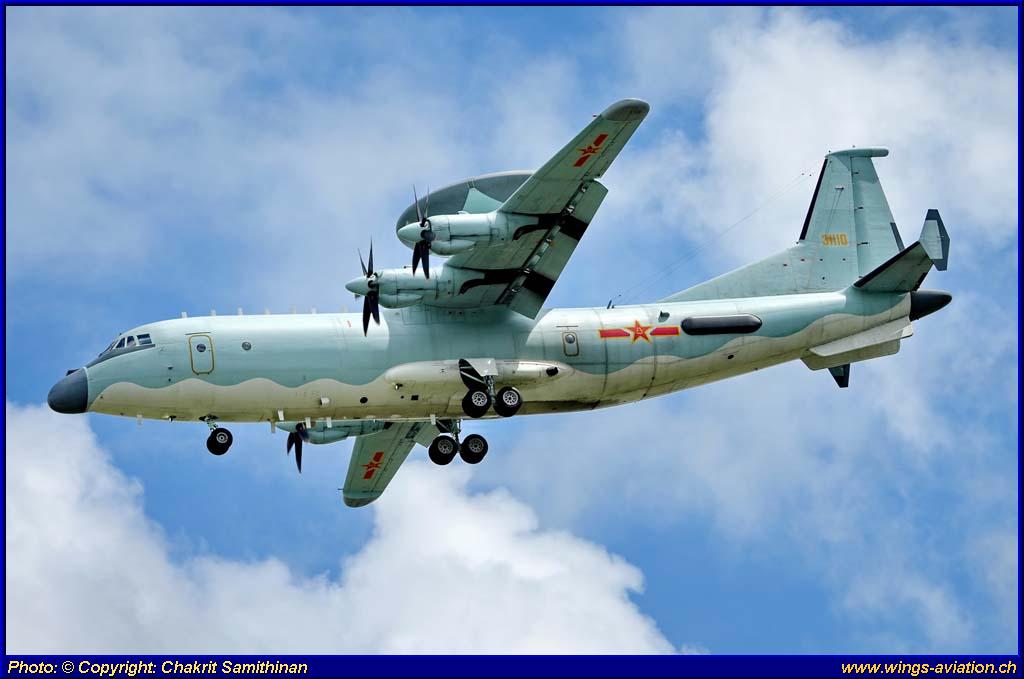

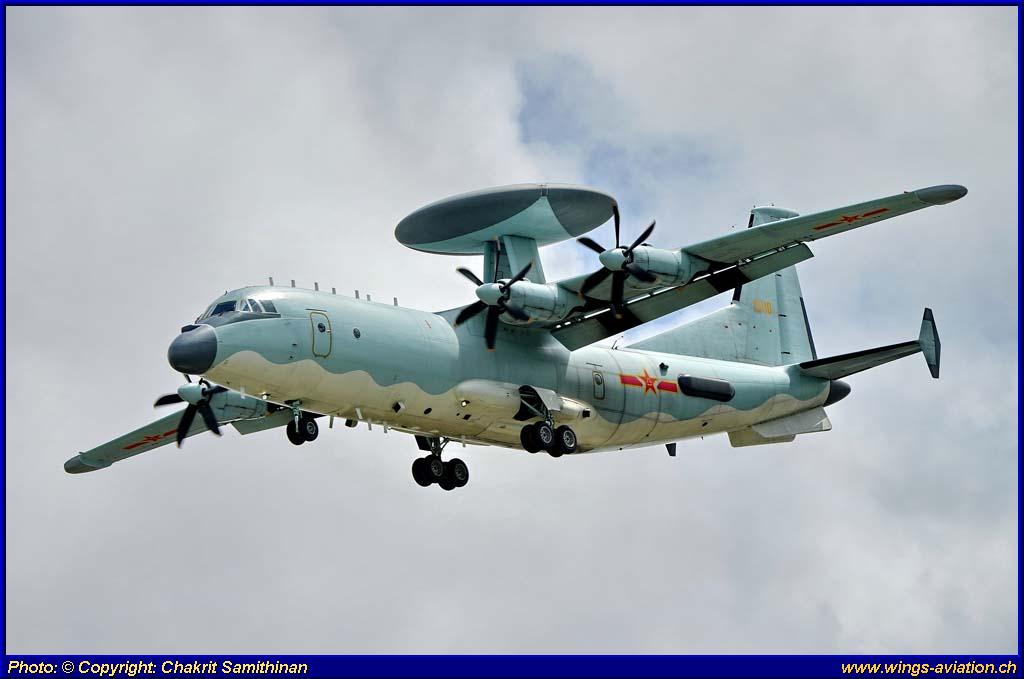


Shaanxi KJ-500 #31110 (Picture courtesy Chakrit Samithinan)
Shaanxi KJ-500 #31110 (Picture courtesy Chakrit Samithinan)
Shaanxi KJ-500 #31110 (Picture courtesy Chakrit Samithinan)
Chengdu J-10C #74110 (Picture courtesy Chakrit Samithinan)
Chengdu J-10C #74111 (Picture courtesy Chakrit Samithinan)


Chengdu J10S #74015 (Picture courtesy Chakrit Samithinan)
Chengdu J10S #74015 (Picture courtesy Chakrit Samithinan)
Chengdu J-10C #74137 (Picture courtesy Chakrit Samithinan)
Chengdu J-10C #74137 (Picture courtesy Chakrit Samithinan)
Chengdu #74111 (Picture courtesy Chakrit Samithinan)



Chengdu #J10S #74015 (Picture courtesy Chakrit Samithinan)
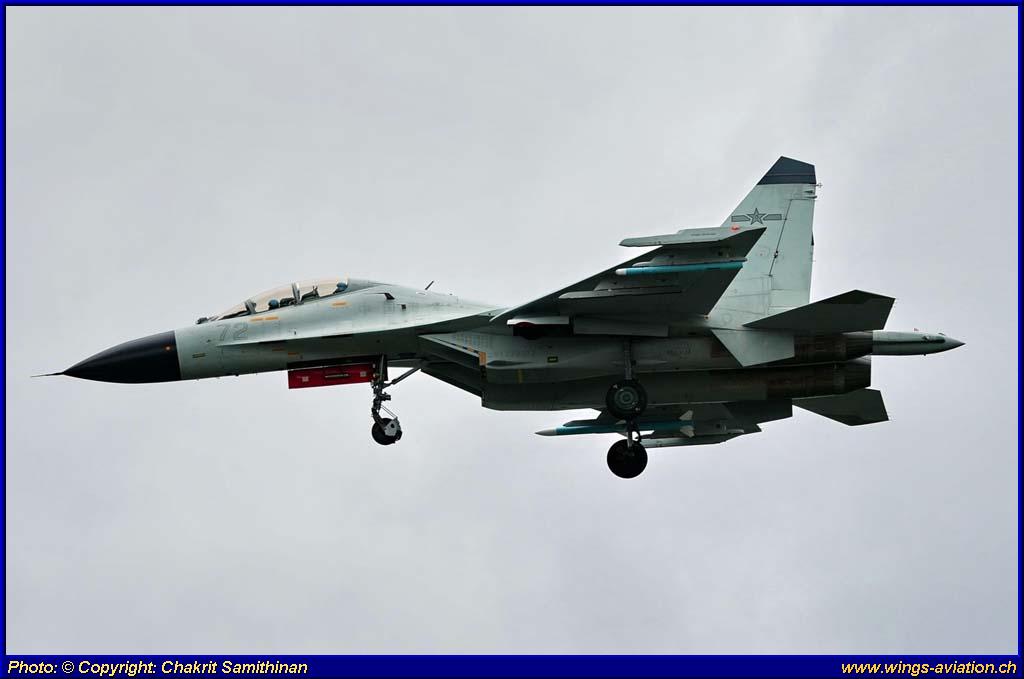
Shenyang J-11 #72 (Picture courtesy Chakrit Samithinan)
Shenyang J-11 #72 (Picture courtesy Chakrit Samithinan)
Shenyang J-11 #02 (Picture courtesy Chakrit Samithinan)
Shenyang J-11 #02 (Picture courtesy Chakrit Samithinan)



Mil Mi-17V5 #52512 (Picture courtesy Chakrit Samithinan)
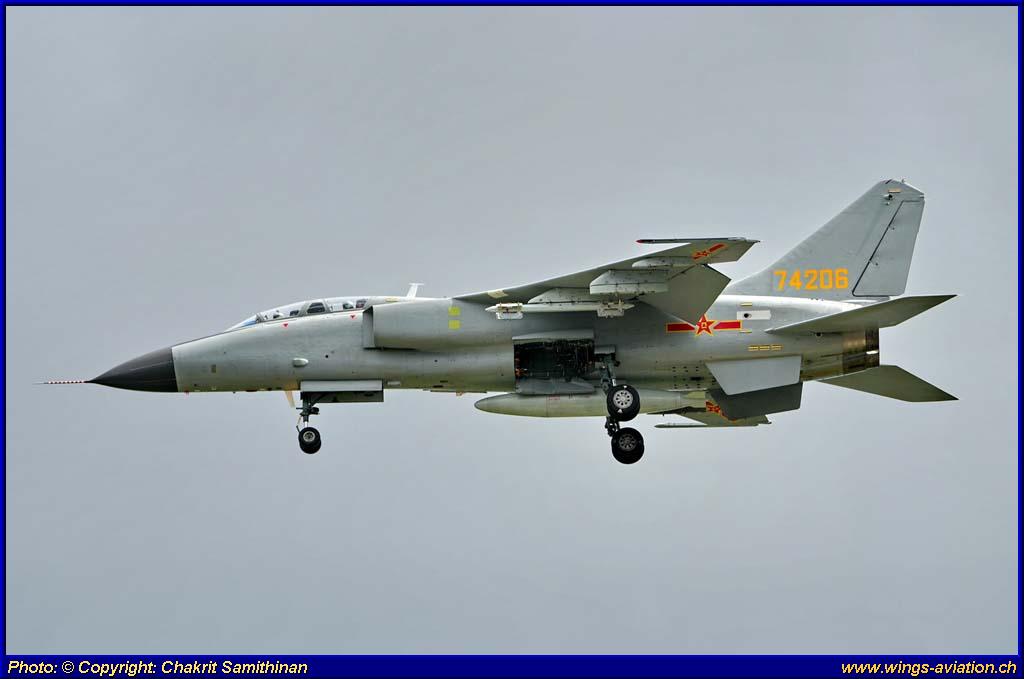
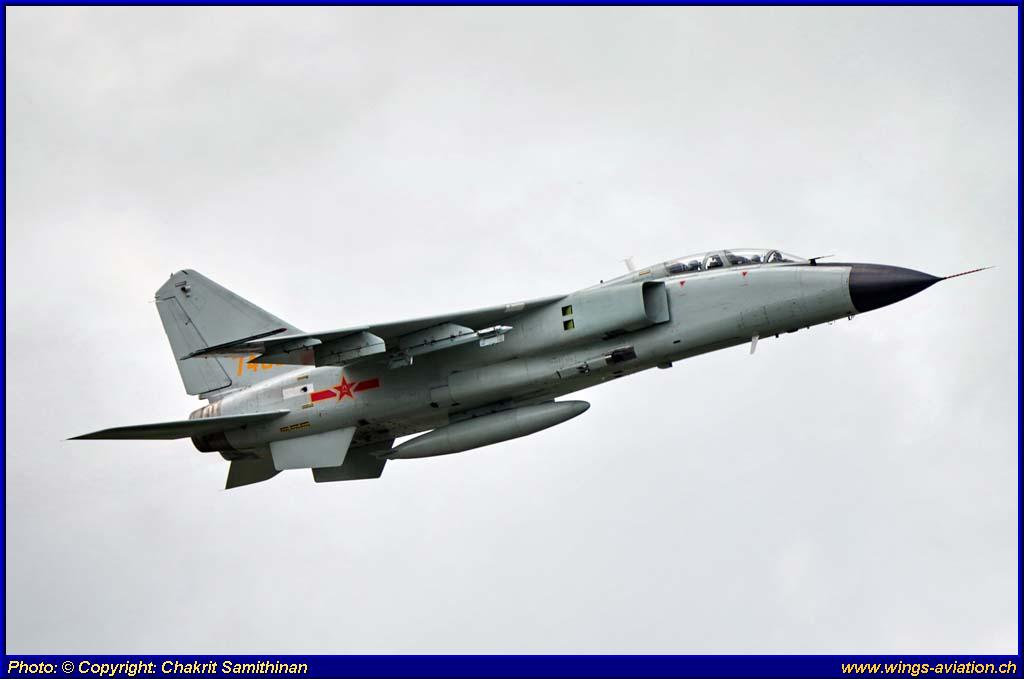
Xian JH-7A #74206 (Picture courtesy Chakrit Samithinan)
Xian JH-7A #74305 (Picture courtesy Chakrit Samithinan)
Xian JH-7A #74305 (Picture courtesy Chakrit Samithinan)
Xian JH-7A #74305 (Picture courtesy Chakrit Samithinan)
In this context a remark about the photos which are accompanying this article. The writer’s effort to document this year’s exercise was not without its frustations. He spent 5 of the 6 days mornings and afternoons waiting mostly in the blazing sun or under rain-threatening skies to photograph the participating aircrafts and was rewarded with only two opportunities. Therefore, the bad weather and the missing sunshine throughout the week are unfortunately visible in most of the attached photographs. Given the scarcity of opportunities to photograph Chinese military aircrafts, any effort which yields a number of photographs of these rarely seen aircrafts can however be considered satisfactory.
