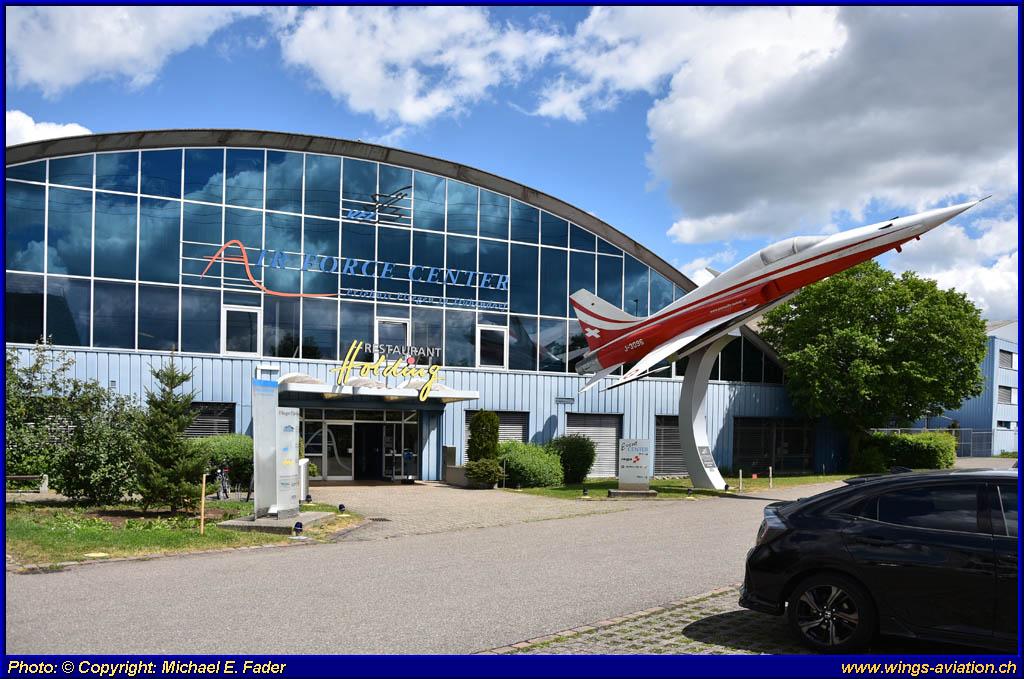
|
Text: |
Michael E. Fader |
|
Pictures: |
Michael E. Fader |

Flieger-
und Flabmuseum
Überlandstrasse 271
8600 Dübendorf
Dienstag bis Freitag 13.30 - 17.00 Uhr
Samstag 9.00 - 17.00 Uhr
Sonntag13.00 - 17.00 Uhr
Eintritt CHF 15.-
www.airforcecenter.ch
Tel. +41 (0)44 824 55 11
Nineteen years ago, Wings-Aviation first reported on the Aviation and Air Defence Museum in Dübendorf. At the time, the focus was purely on a photo feature. So it is high time to take a fresh look at the museum near Zurich and see what has changed there since then.
History
Dübendorf was one of Switzerland’s first airfields and went on to become
the most important base for the fledgling Swiss Air Force. For a long
time, decommissioned aircraft were scrapped due to a lack of space. In
most cases, only individual components such as engines, instruments,
weapons or propellers were preserved. Even in the case of foreign
aircraft that had landed in Switzerland during the Second World War, it
was mainly engines that were stored at various government departments.
By contrast, entire aircraft were preserved only in exceptional cases
until 1965.
As early as the Second World War, a depot had been set up at Schadau Castle in the canton of Bern. There, historically significant material was collected for a planned army museum, which was ultimately never realised. After the end of the war, some of the material gathered by the Directorate of Military Airfields was returned to its original locations, whilst other items were transferred to various armouries.
In Dübendorf, the then indoor hall manager took the initiative to find a suitable place to store the equipment. Some of the engines also found their way into the collection of the Technorama Association in Oberwinterthur and to the ETH Zurich Machine Laboratory.
In 1970, the Department of Military Airfields handed over some of the material suitable for a civilian exhibition to the Swiss Museum of Transport in Lucerne. It served as a contribution to the newly opened Aviation Hall. Several aircraft were also made available to the museum on loan.
The Pioneering Era and the First World War
Only a few original aircraft from the early days of Swiss military aviation have survived. The aircraft from this early era on display in the museum are therefore replicas that were built at a later date. As numerous historic models – such as the Wild WT – no longer exist, scale models complement the exhibition. They provide an overview of the development and evolution of the Swiss Air Force and thus fill important gaps in the collection.

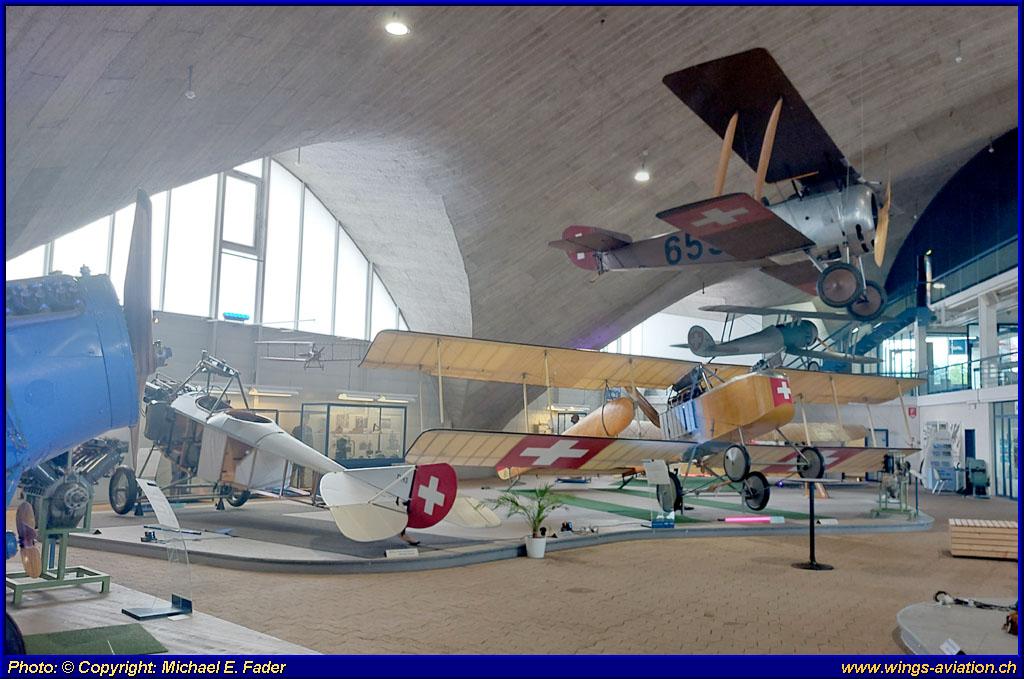
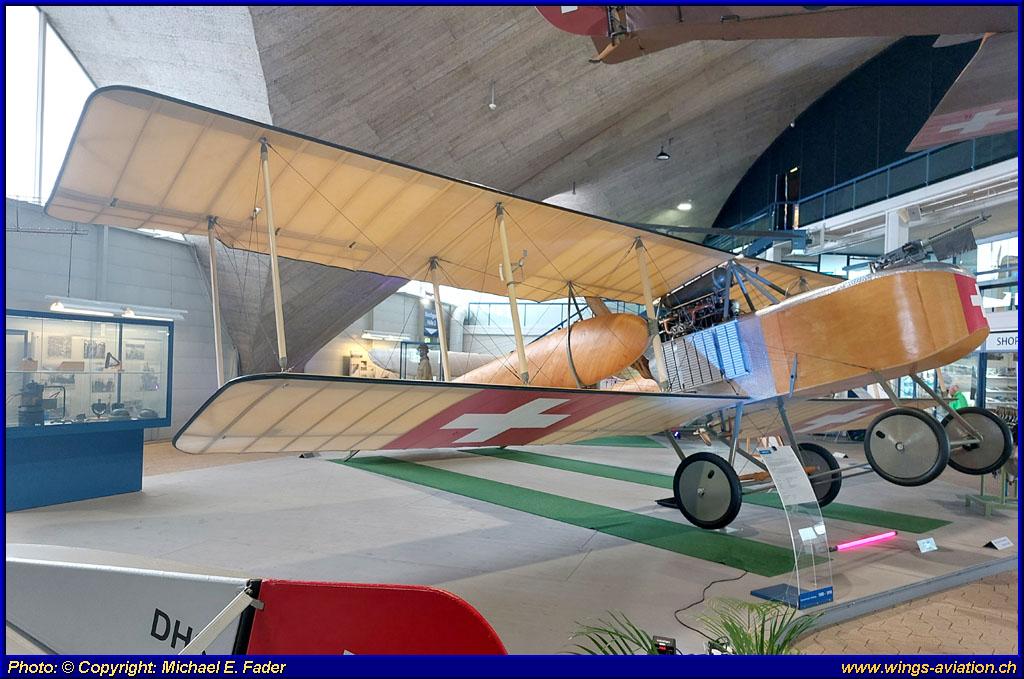
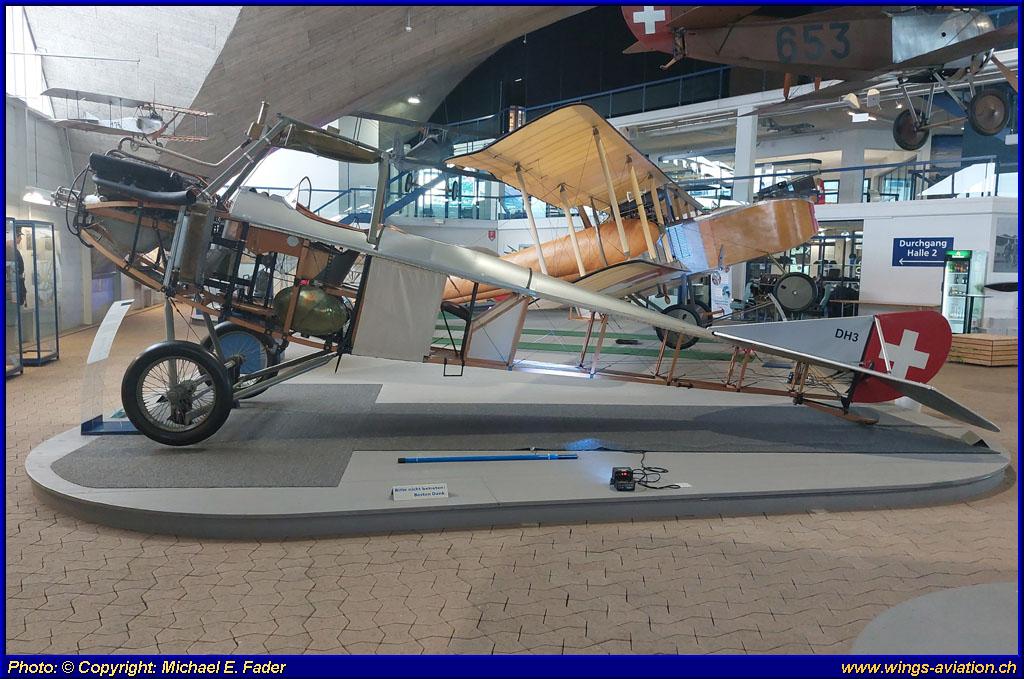

(Picture courtesy Michael E. Fader)
Häfeli DH-1 (Picture courtesy Michael E. Fader)
Häfeli DH-1 (Picture courtesy Michael E. Fader)
Häfeli DH-3 (Picture courtesy Michael E. Fader)
Häfeli DH-5 (Picture courtesy Michael E. Fader)
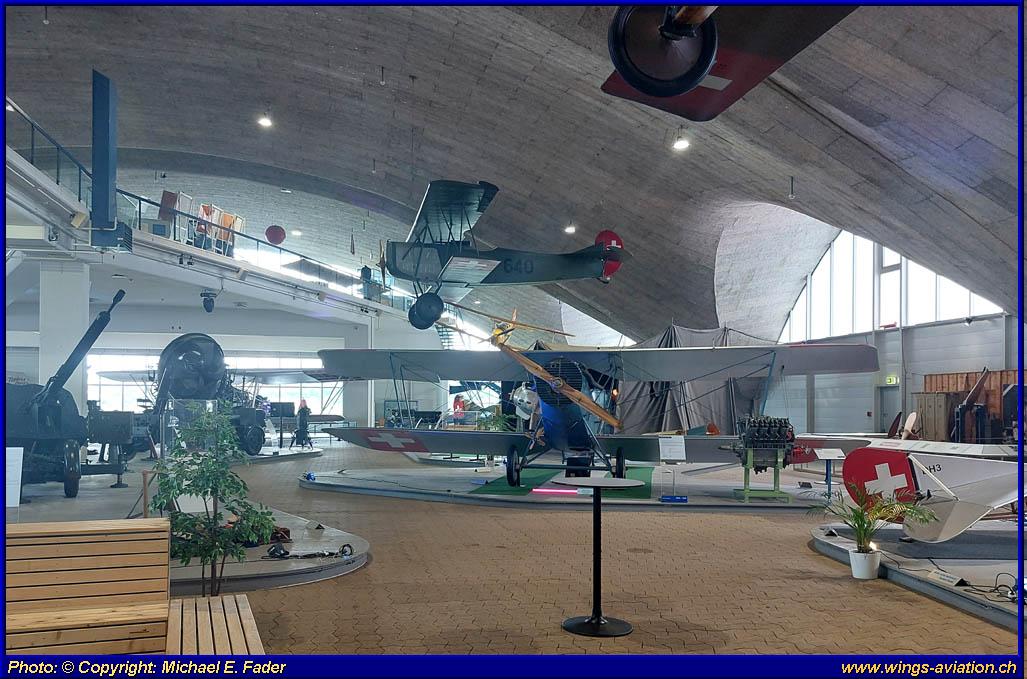
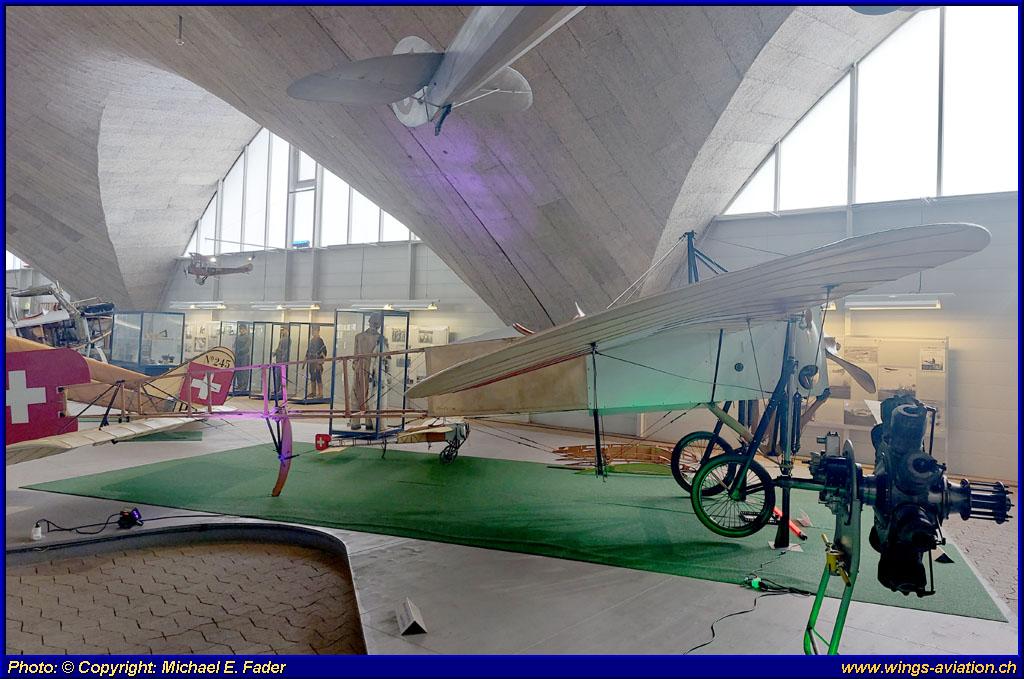


(Picture courtesy Michael E. Fader)
Bleriot XI (Picture courtesy Michael E. Fader)
Workshop (Picture courtesy Michael E. Fader)
Modells of the early Aircraft of the Flugwaffe (Picture courtesy Michael E. Fader)
History
In 1970, Hans Giger, Director of the Federal Office for Military
Airfields, decided to bring together the historical material that had
until then been scattered across numerous locations. The collection was
stored in Hangar 13, one of the three hangars dating from the First
World War at Dübendorf Airfield, and was first presented in 1972 as part
of an internal guided tour.
Between 1972 and 1978, the collection was systematically expanded by staff from the Office for Military Airfields. After some difficulties, the engines stored at the Lyss Armoury and other exhibits from the Technorama were also returned to Dübendorf. Hangar 14, the second of the three historic hangars, was eventually also used to house the growing collection.
During these years, occasional guided tours were already taking place. In 1978, the time had finally come: the Museum of the Swiss Air Force was officially opened in the two historic hangars.
the 1930s
Of the aircraft from the 1930s, one Fokker C.V has survived. The fabric covering on one side of the aircraft has been removed so that the interior can be seen. Other aircraft from this era include the Dewoitine D.26 and the Eidgenössische Konstruktionswerksätte (EKW) C-35. This aircraft was broadly based on the Fokker C.V.
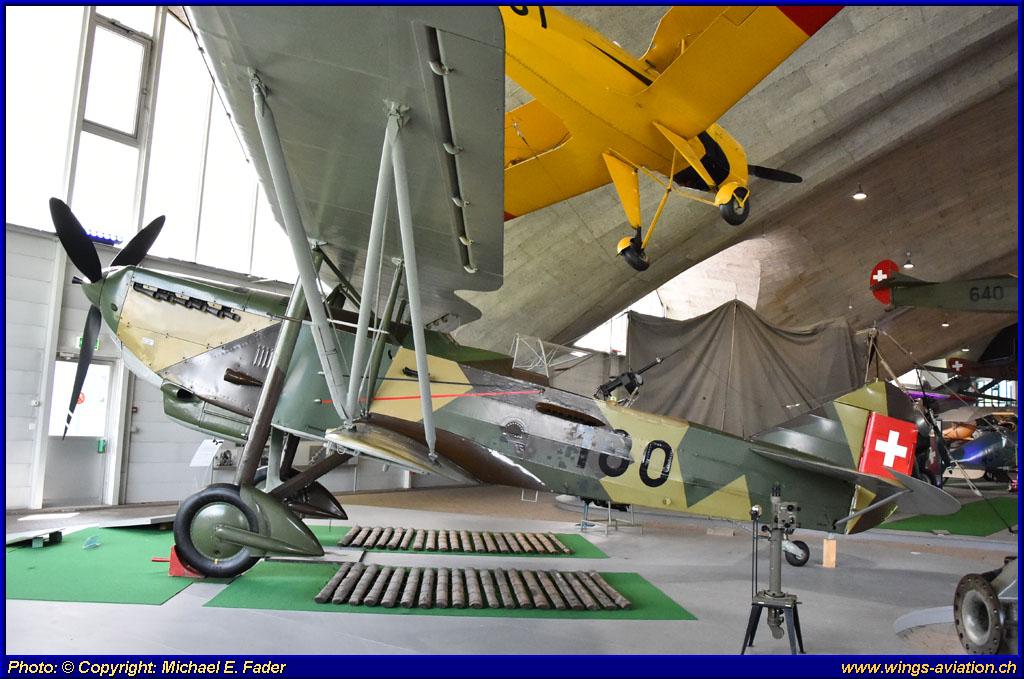
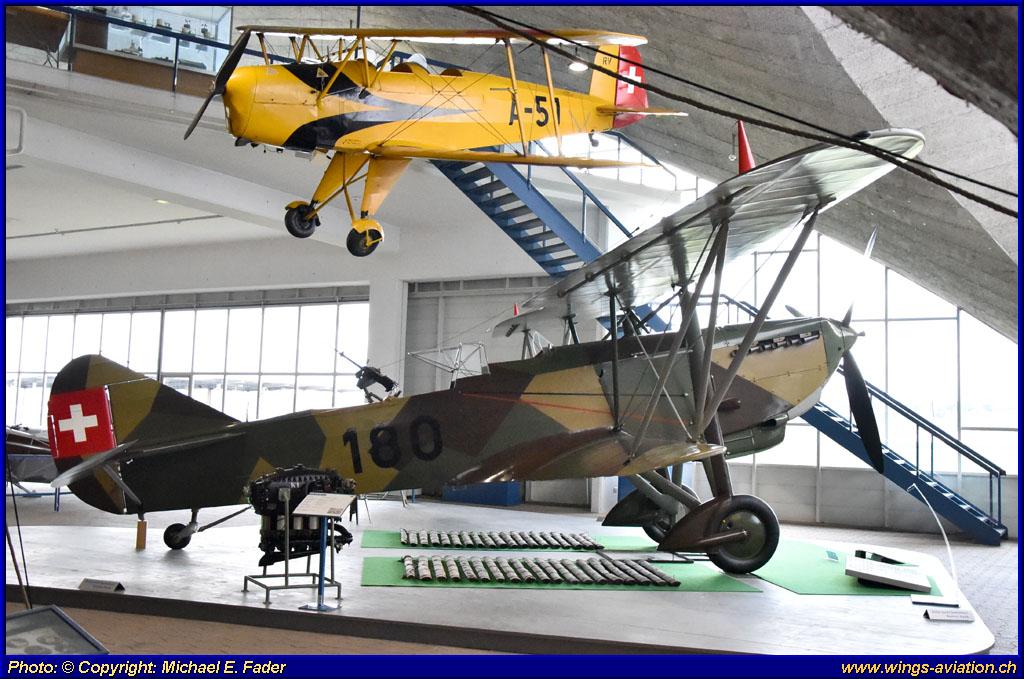
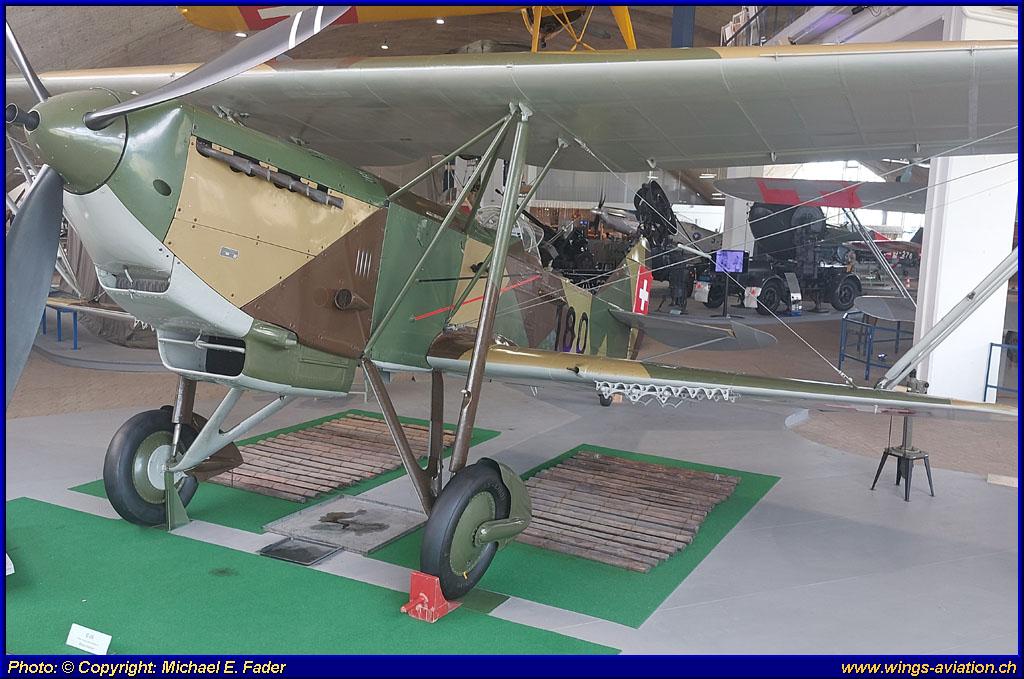

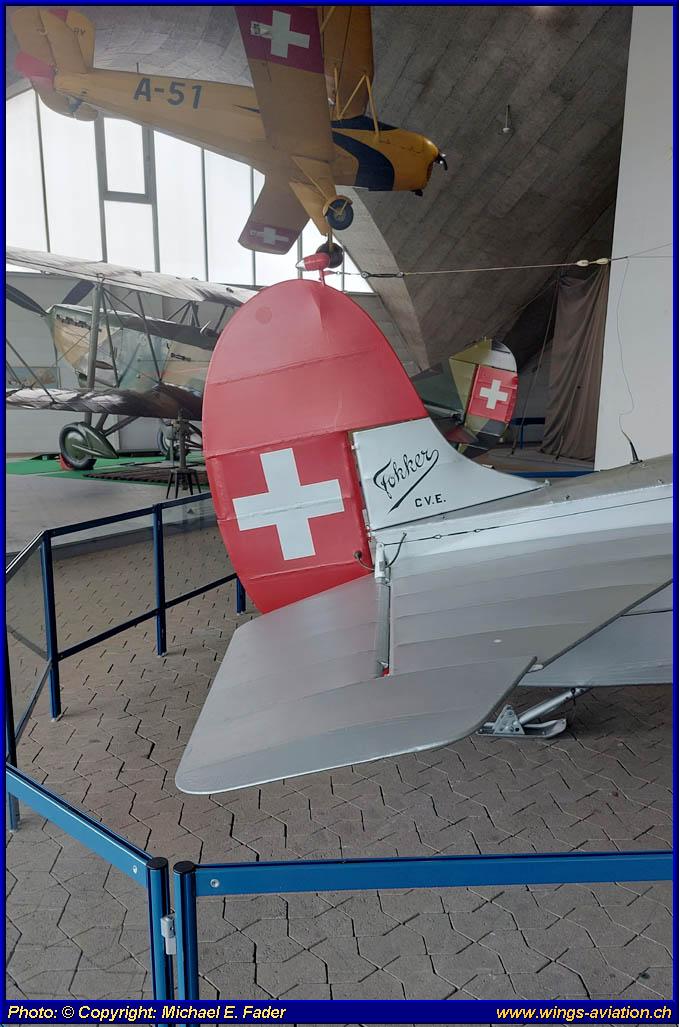
EKW C-35 (Picture courtesy Michael E. Fader)
EKW C-35 (Picture courtesy Michael E. Fader)
EKW C-35 (Picture courtesy Michael E. Fader)
Fokker C.V (Picture courtesy Michael E. Fader)

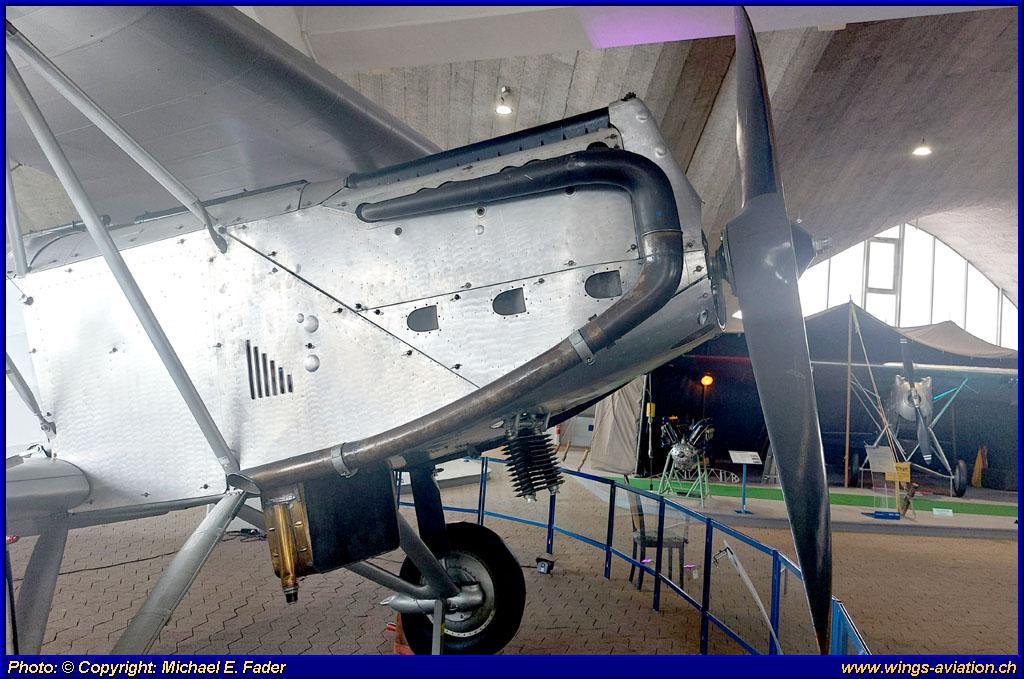
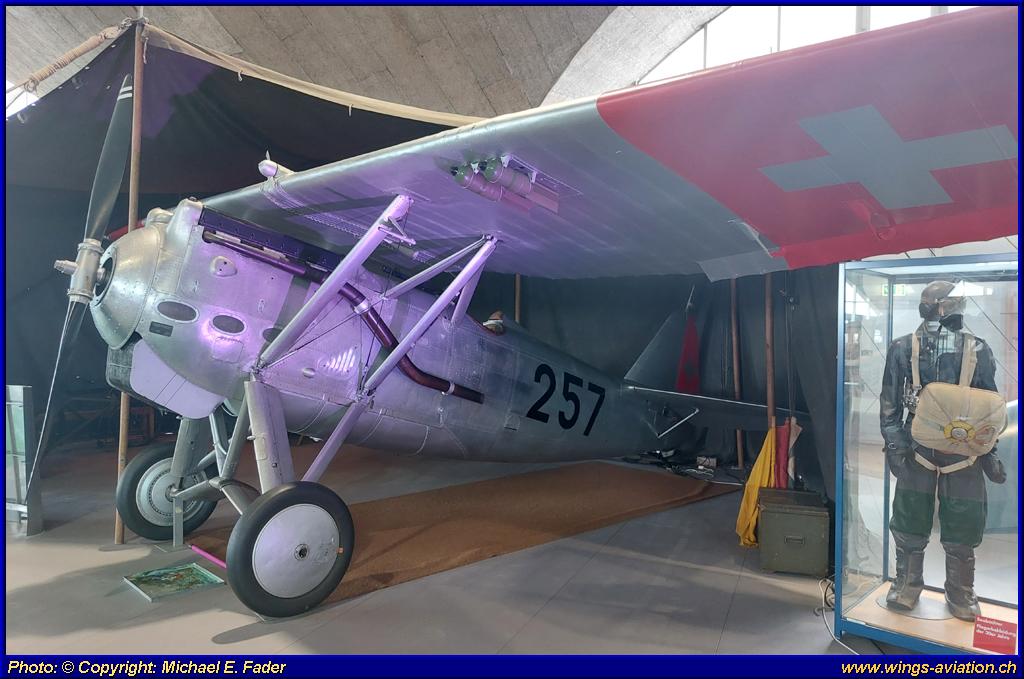
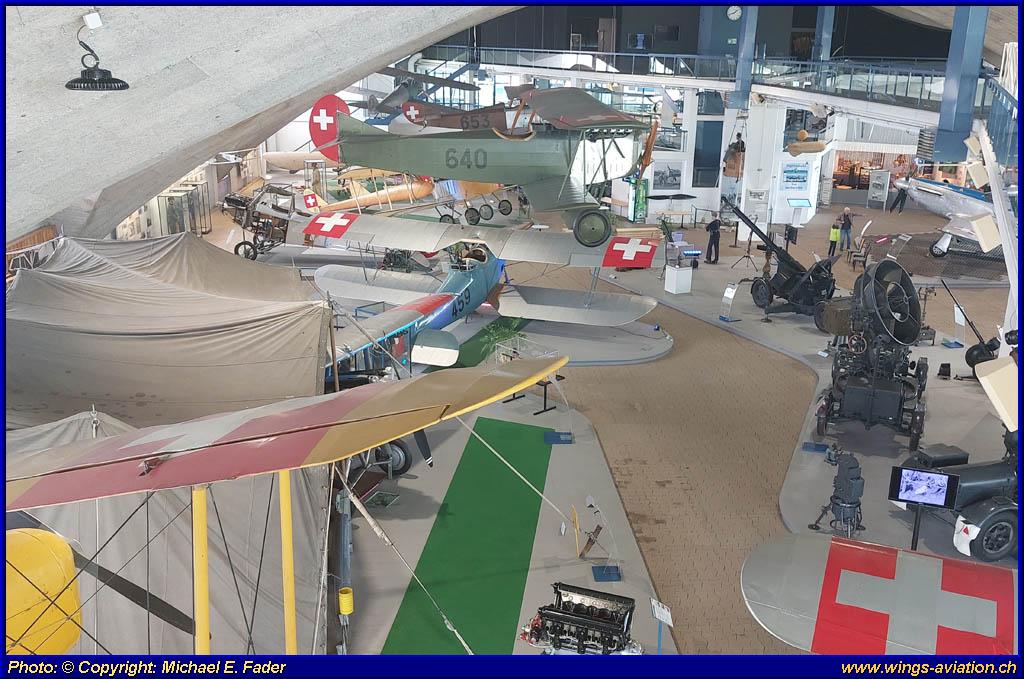
Fokker C.V (Picture courtesy Michael E. Fader)
Fokker C.V (Picture courtesy Michael E. Fader)
Dewoitine D-26 (Picture courtesy Michael E. Fader)
(Picture courtesy Michael E. Fader)
Fokker C.V (Picture courtesy Michael E. Fader)
The Second World War and the post-war period
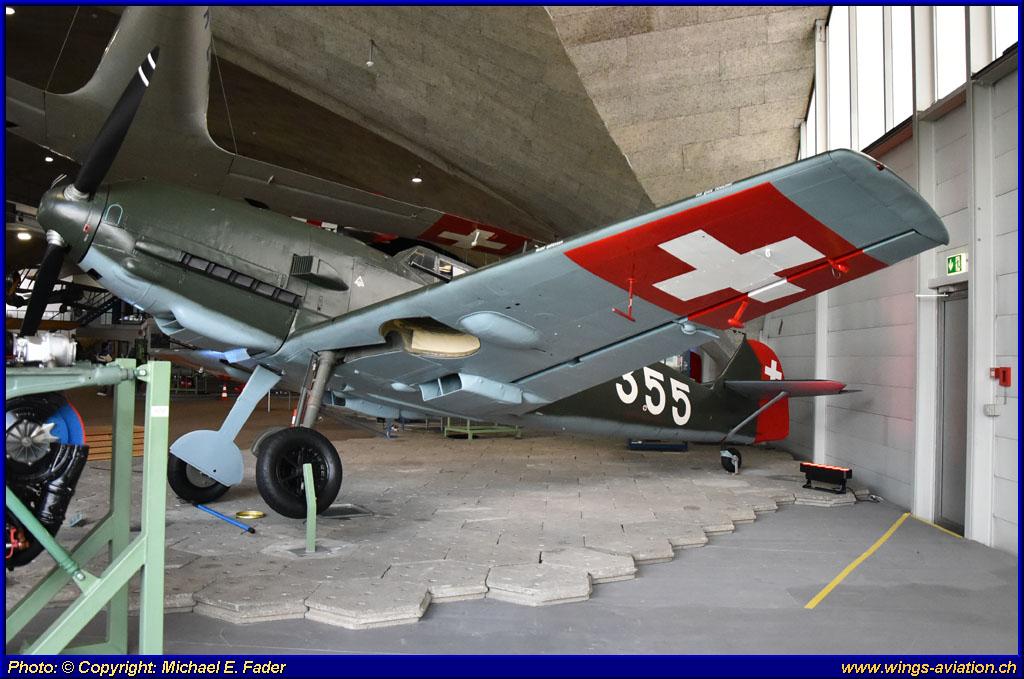
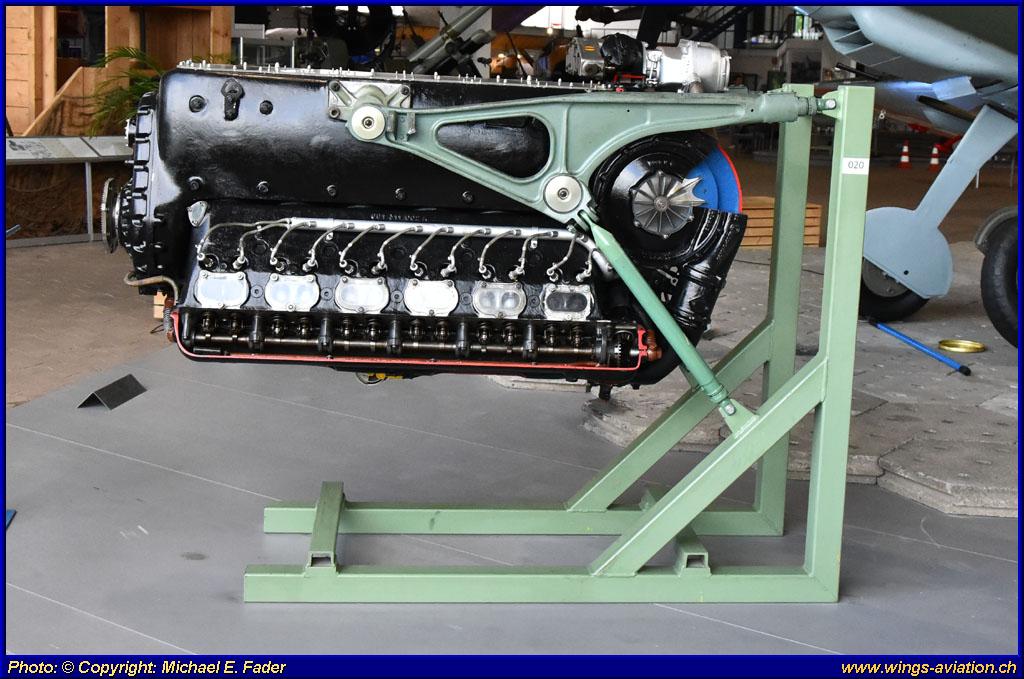
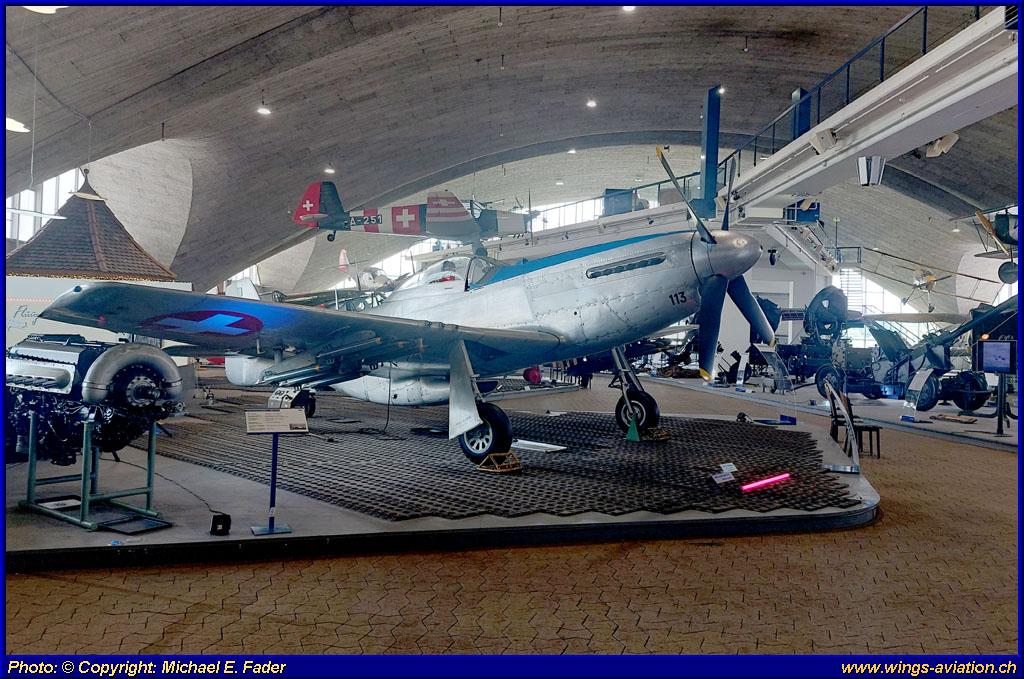
The Second World War presented neutral Switzerland with major challenges. It was virtually impossible to procure new fighter aircraft during the war, meaning that the Swiss Air Force had to make do largely with the aircraft acquired before the war began. In the case of fighter aircraft, these were primarily the Messerschmitt Bf.109E and the Morane-Saulnier MS.450, which were manufactured under licence and, in some cases, further developed. To fill the existing gaps, Switzerland also relied on its own developments. In addition to the EKW C-35 mentioned above, the EKW C-36 was another domestically produced fighter aircraft that saw service with the Swiss Air Force during the Second World War
| List of aircraft on site | |
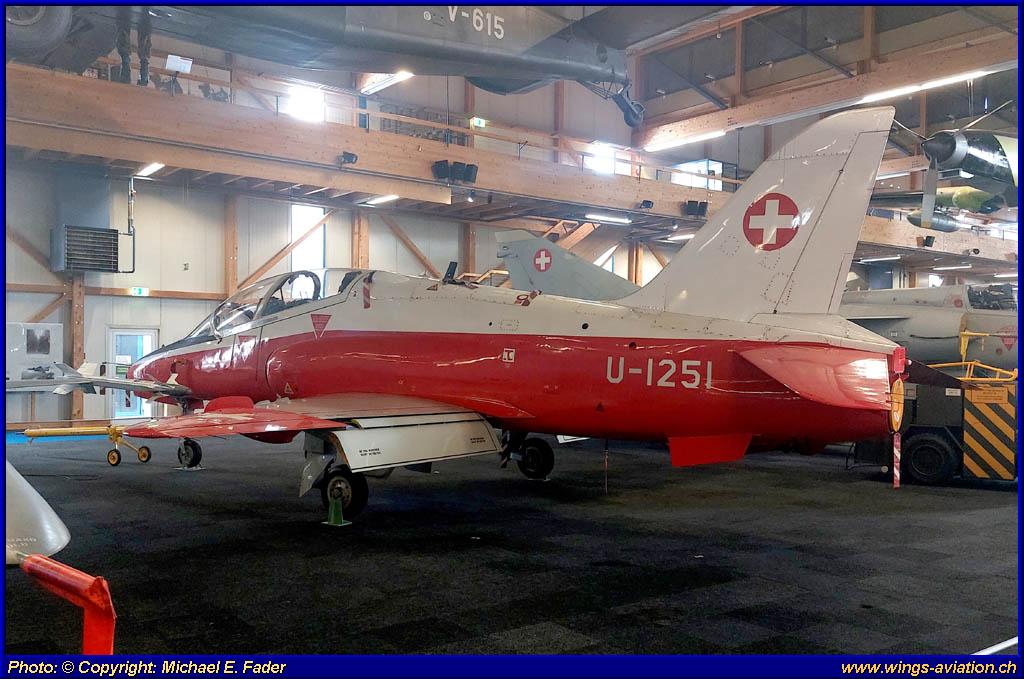
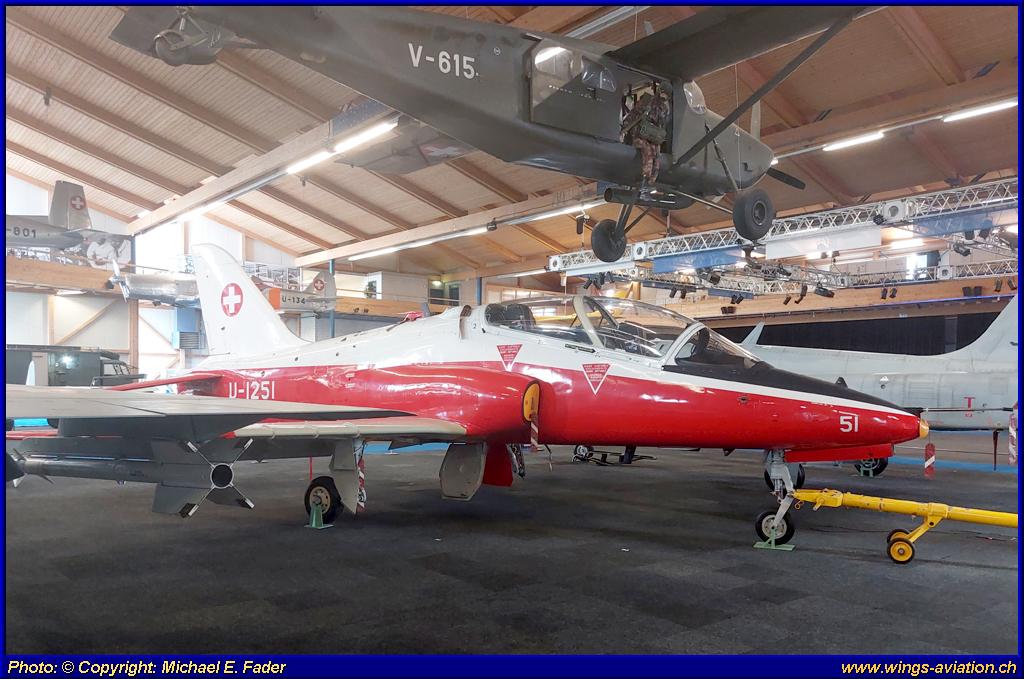
| BAE Hawk T Mk. 66 | U-1251 |
| Beech E-50 Twin Bonanza * | A-517 |
| Beech 18 * | HB-GAC |
| Nord 1203 Norécrin II * | HB HOI |
| Bleriot XI | 22 |
| Bücker Bü-131 Jungmann | A-51 |
| Bücker Bü-133 Jungmeister | U-61 |
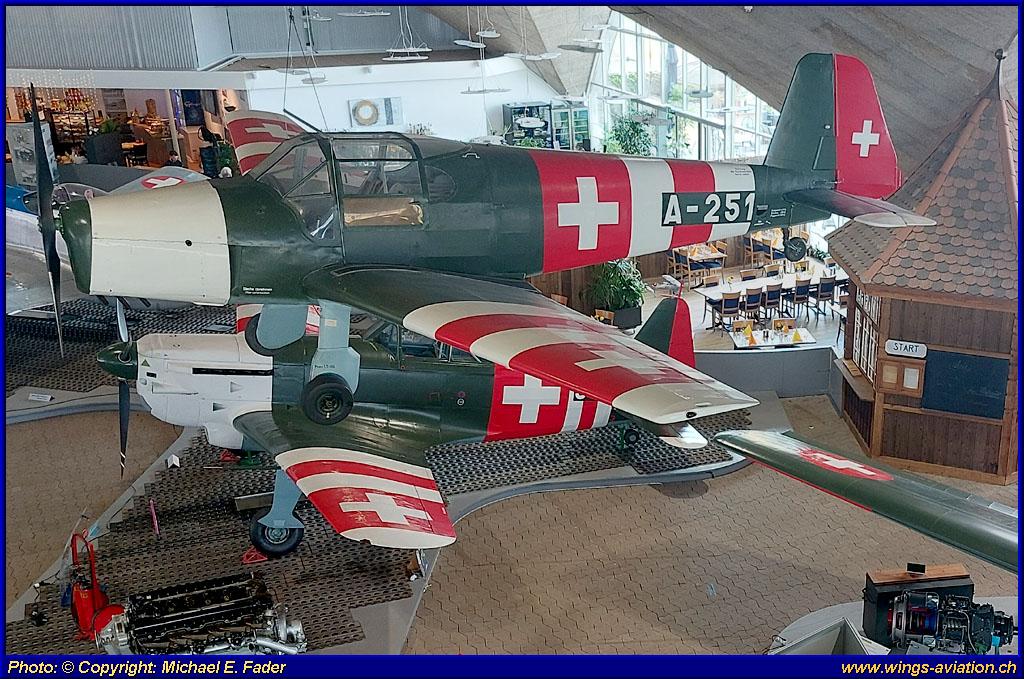
| Bücker Bü-181 Bestmann | A-251 |
| Comte AC-4 * | ? |
| Dassault Mirage IIIC * | J-2201 |
| Dassault Mirage IIIS | J-2335 |
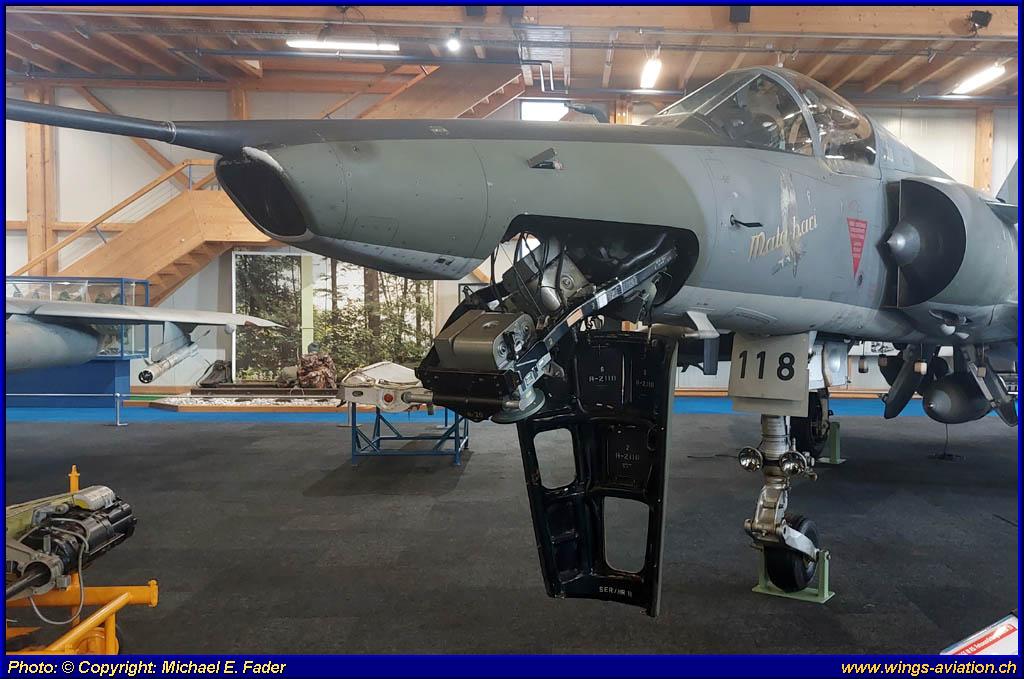
| Dassault Mirage IIIRS | J-2118 |
| Dassault Mirage IIIDS | J-2011 |
| Dewoitine D-26 | 257 |
| De Havilland DH.100 Vampire | J-1153 |
| De Havilland DH.112 Venom | J-1753 |
| De Havilland DH-112 Venom Aufklärer | J-1642 |
| De Havilland DH-115 Vampire | J-1224 |
| Dornier Do-27H2 * | V-607 |
| EKW C-35 | 180 |
| EKW C-3603 | C-534 |
| EKW C-3605 | C-497 |
| EKW (Morane-Saulnier) D-3800 | J-276 |
| FFA P-16 | X-HB-VAD |
| Fieseler Fi 156 Storch | A-100 |
| Fokker D.VII | 640 |
| Fokker C.V | 331 |
| Hanriot HD-1 | 653 |
| Häfeli DH-1 | 245 |
| Häfeli DH-3 | ? |
| Häfeli DH-5 | 459 |
| Hawker Hunter F Mk. 58 | J-4001 |
| Hawker Hunter F Mk. 58A | J-4152 |
| Hawker Hunter T Mk. 68 | J-4204 |
| Hiller UH-12B | KAB-202 |
| North American P-51D Mustang | J-2113 |
| North American AT-16 Havard IIb * | U-328 |
| Northrop F-5E Tiger (J-3013) | J-3096 |
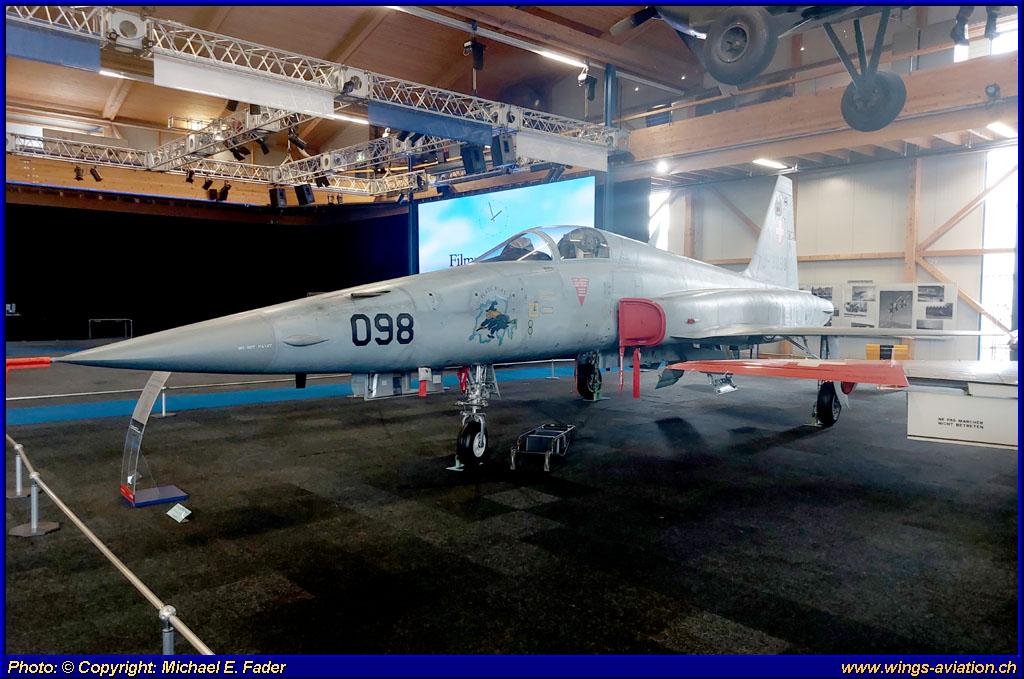
| Northrop F-5E Tiger | J-3098 |
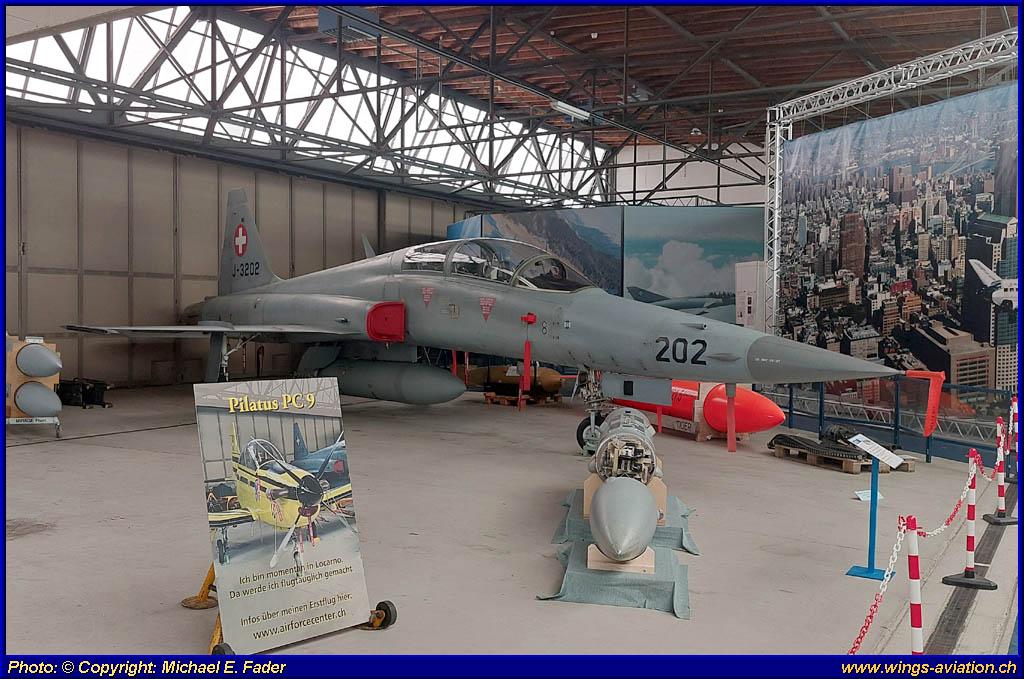
| Northrop F-5F Tiger | J-3202 |
| Messerschmitt Bf 108B Taifun | A-209 |
| Messerschmitt Bf 109E | J-355 |
| Pilatus P-2 | U-134 |
| Pilatus P-3 | A-801 |
| Pilatus P-3 | A-803 |
| Pilatus PC-6 | V-615 |
| Pilatus PC-7 Turbo Trainer | A-901 |
| Pilatus PC-9 * | C-401 |
| Sud-Ouest Djinn | V-23 |
| Süd Aviation Alouette II | V-49 |
| Süd Aviation Alouette III | V-271 |
| N-20.2 Arbalète | - |
| N-20.10 Aiguillon | - |
| * Not currently on display | |
Bücker Bü-181 Bestmann (Picture courtesy Michael E. Fader)
Messerschmitt Bf 109E (Picture courtesy Michael E. Fader)
(Picture courtesy Michael E. Fader)
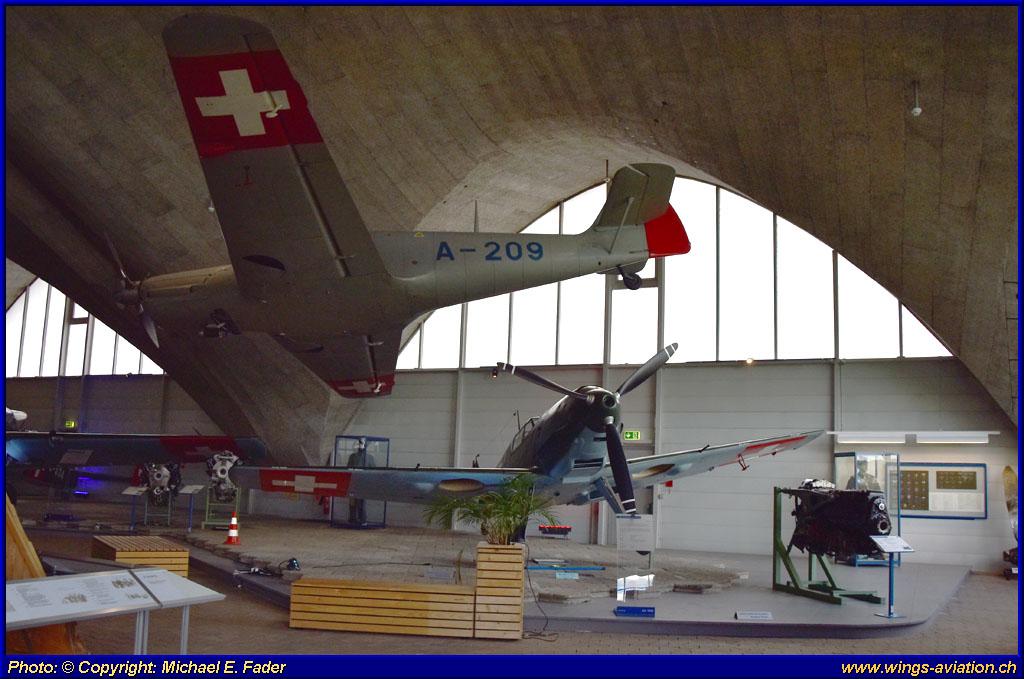


Messerschmitt Bf 108B Taifun (Picture courtesy Michael E. Fader)
EKW C-3603 (Picture courtesy Michael E. Fader)
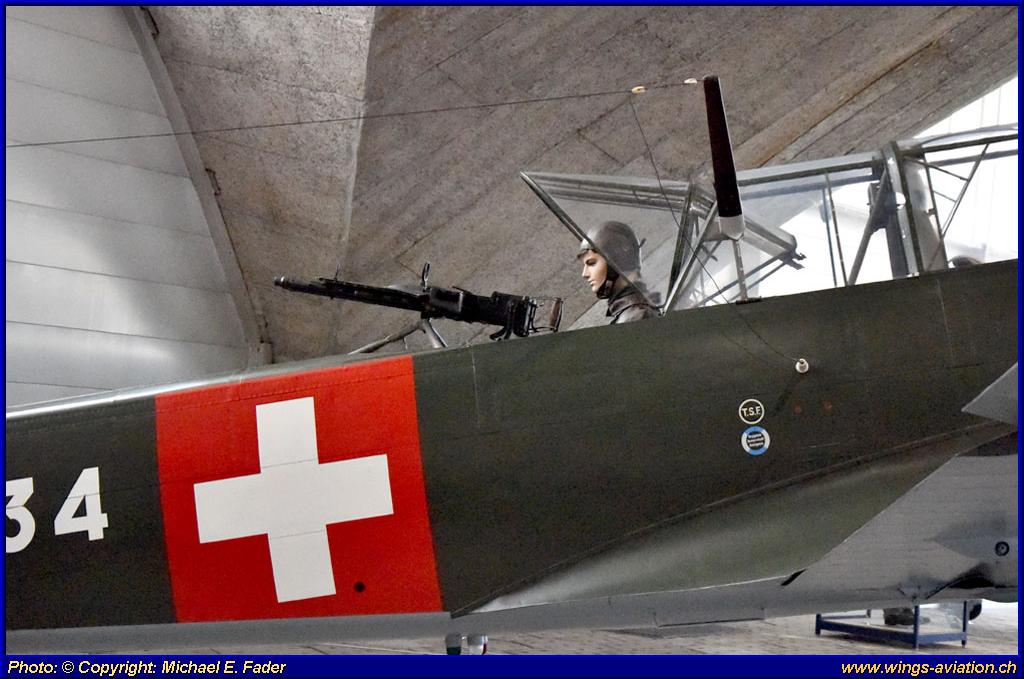
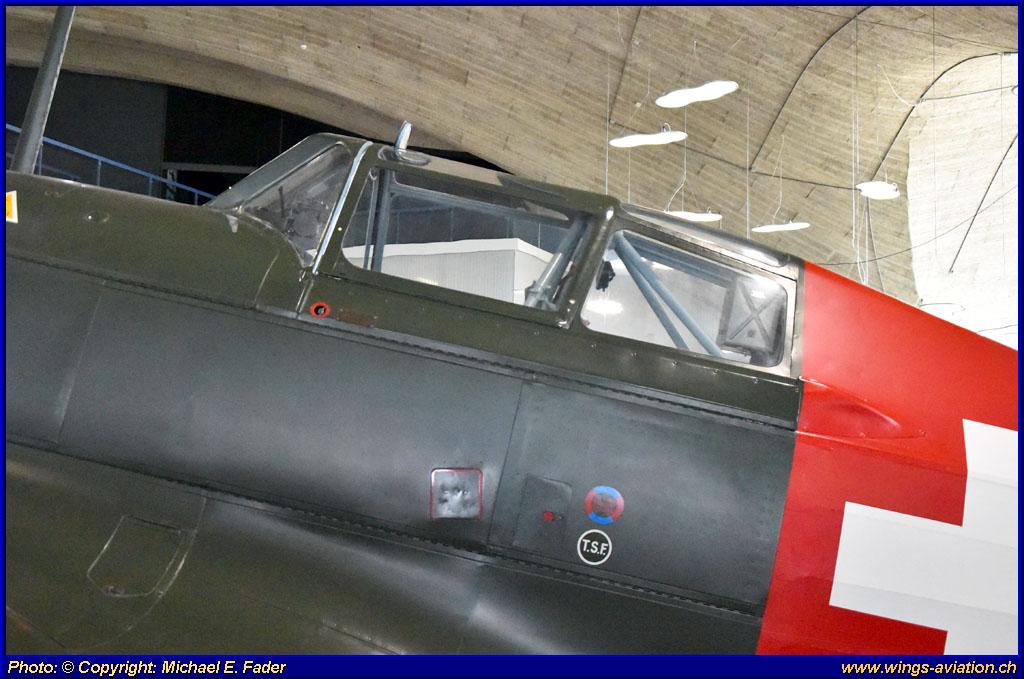
EKW C-3603 (Picture courtesy Michael E. Fader)
EKW C-3603 (Picture courtesy Michael E. Fader)
EKW C-3603 (Picture courtesy Michael E. Fader)


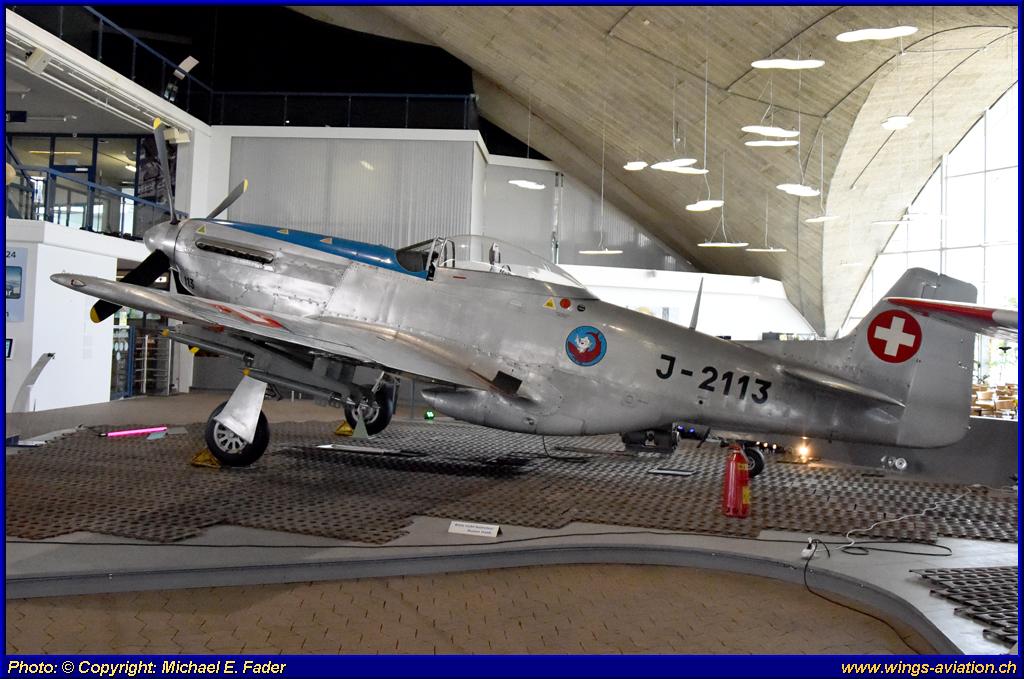
EKW (Morane-Saulnier) D-3800 (Picture courtesy Michael E. Fader)
EKW (Morane-Saulnier) D-3800 (Picture courtesy Michael E. Fader)
North American P-51D Mustang (Picture courtesy Michael E. Fader)
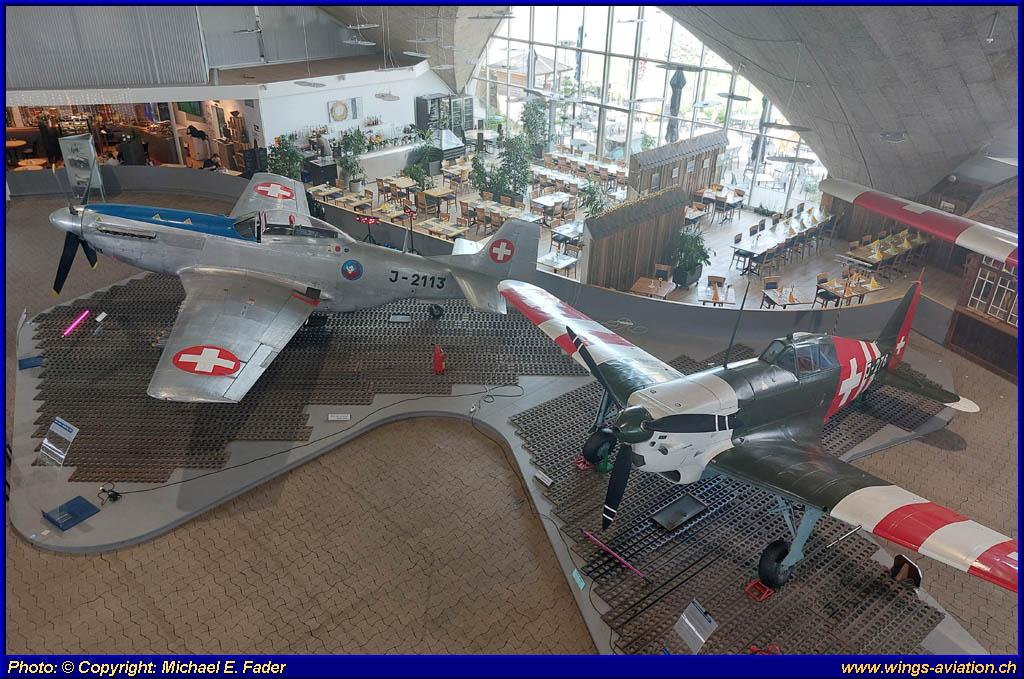
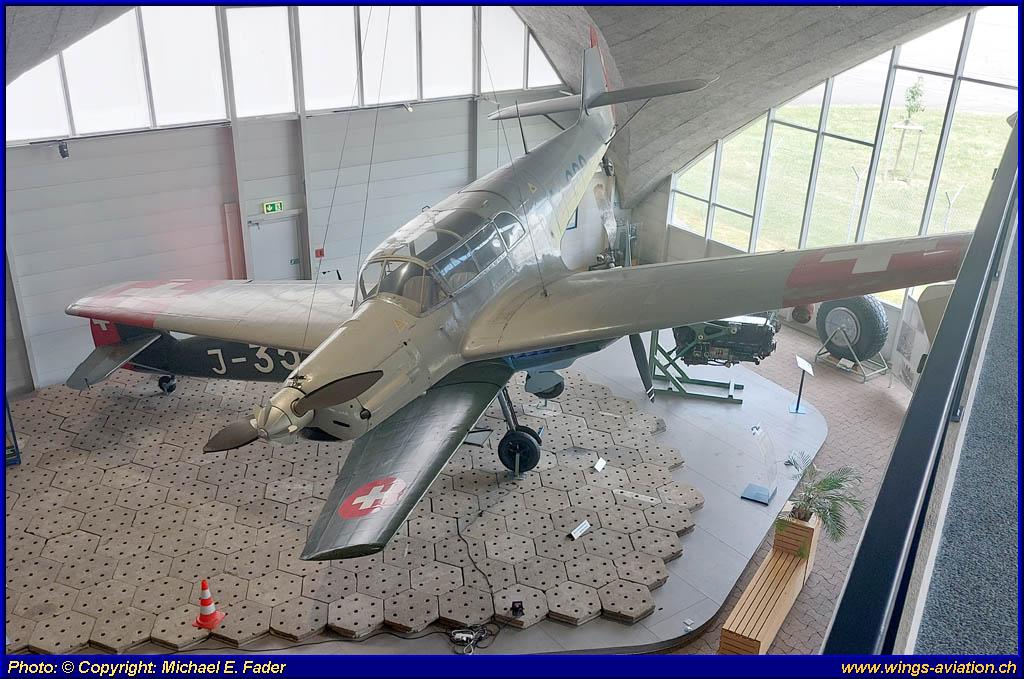
North American P-51D Mustang (Picture courtesy Michael E. Fader)
North American P-51D Mustang (Picture courtesy Michael E. Fader)
Messerschmitt Bf 108B Taifun (Picture courtesy Michael E. Fader)
Entwicklung der Düsenjäger
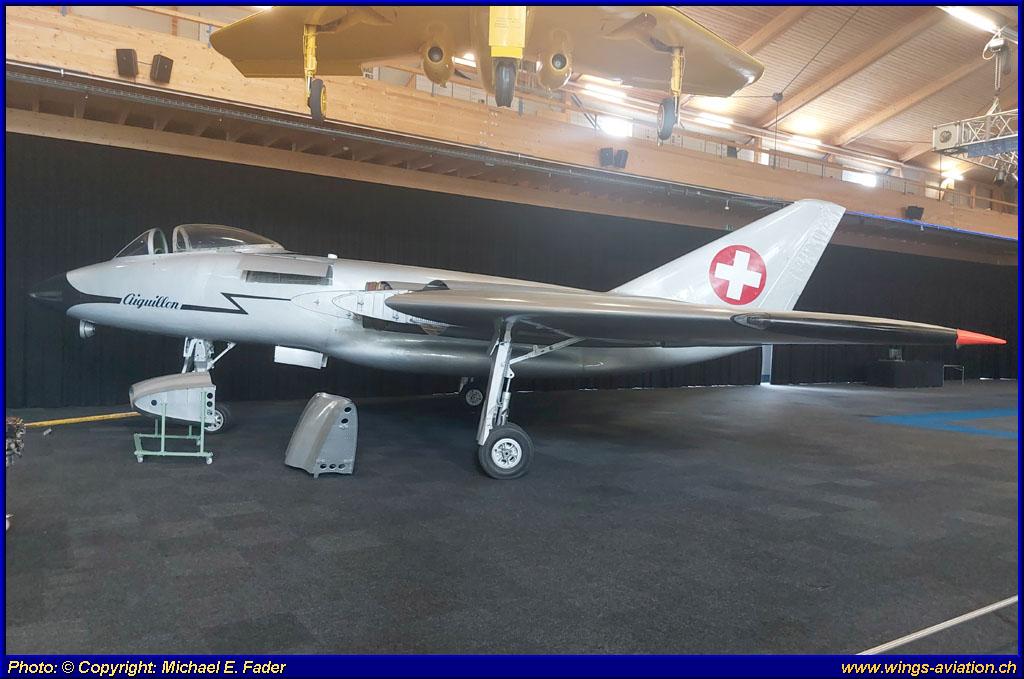
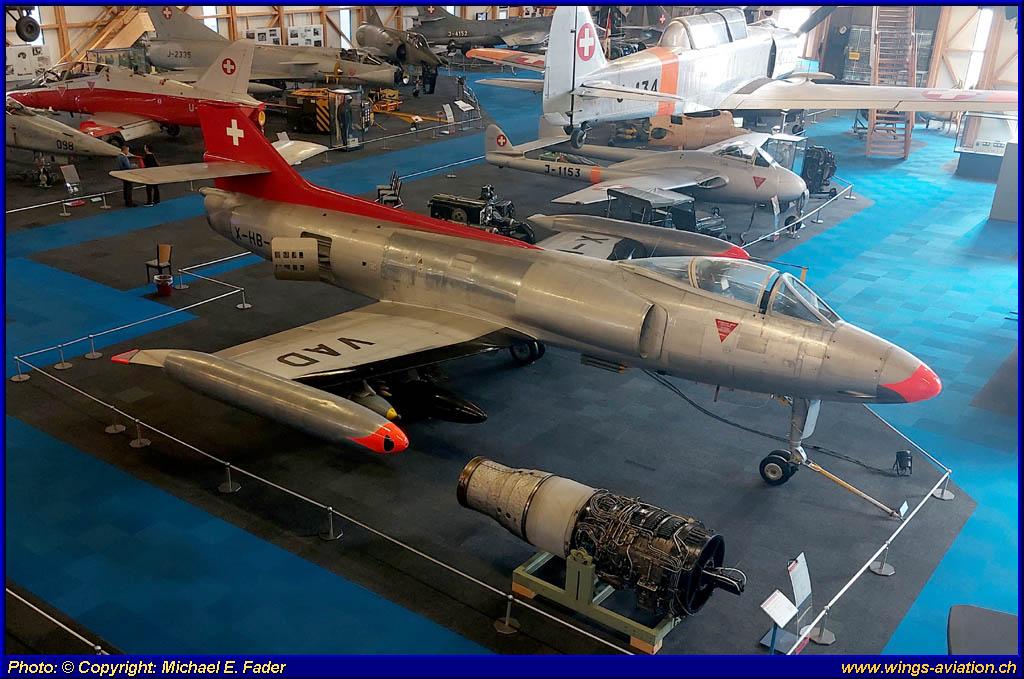
After the Second World War, Switzerland made a fresh attempt at developing modern fighter aircraft. One of the most ambitious projects was the N-20.10 Aiguillon, with its distinctive delta wing. However, the aircraft was never completed and never took to the air. Only the N-20.2 Arbalète prototype, intended as a test platform, was able to take off under its own power. The development of the FFA P-16, which was designed as a ground-attack aircraft, proved more successful. A total of five aircraft flew. Ultimately, both projects were discontinued not for technical reasons, but as a result of political decisions.
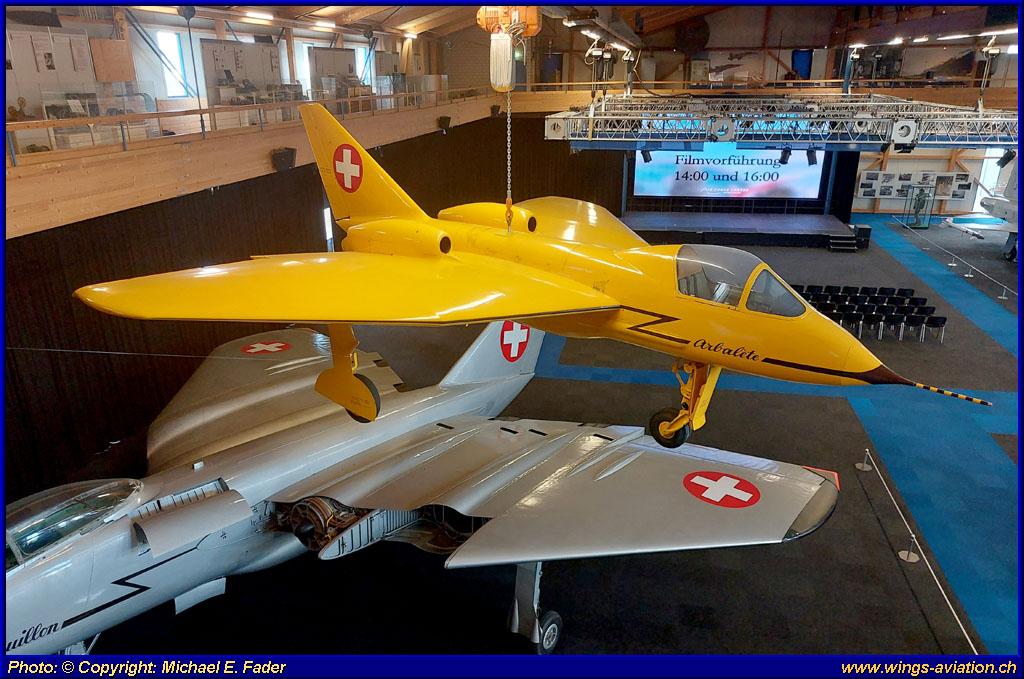
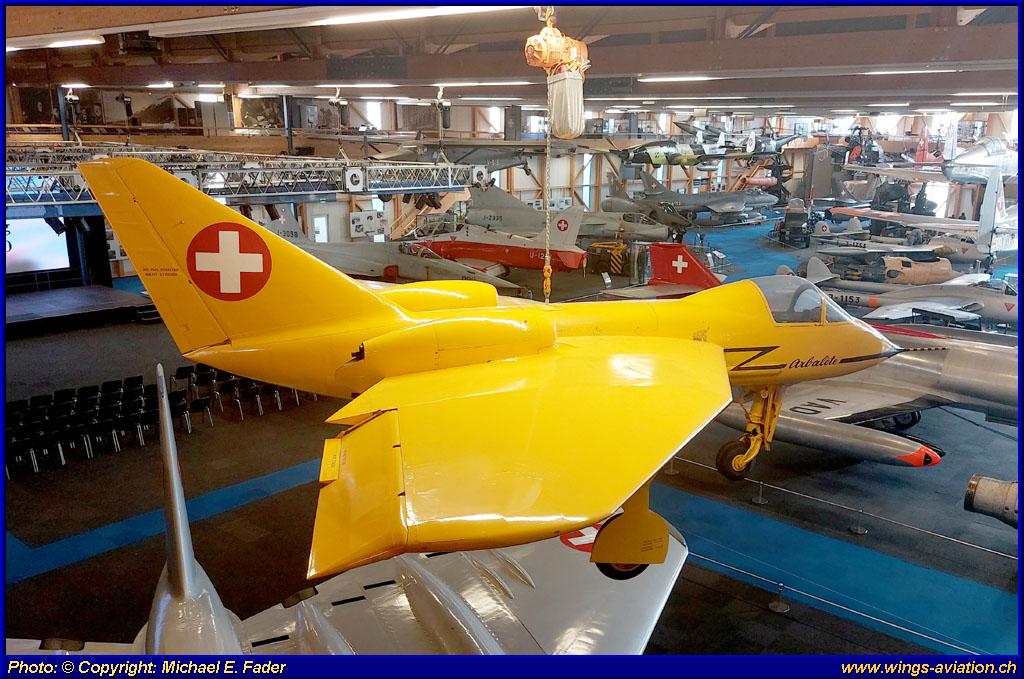
N-20.2 Arbalète (Picture courtesy Michael E. Fader)
N-20.2 Arbalète (Picture courtesy Michael E. Fader)
N-20.10 Aiguillon (Picture courtesy Michael E. Fader)
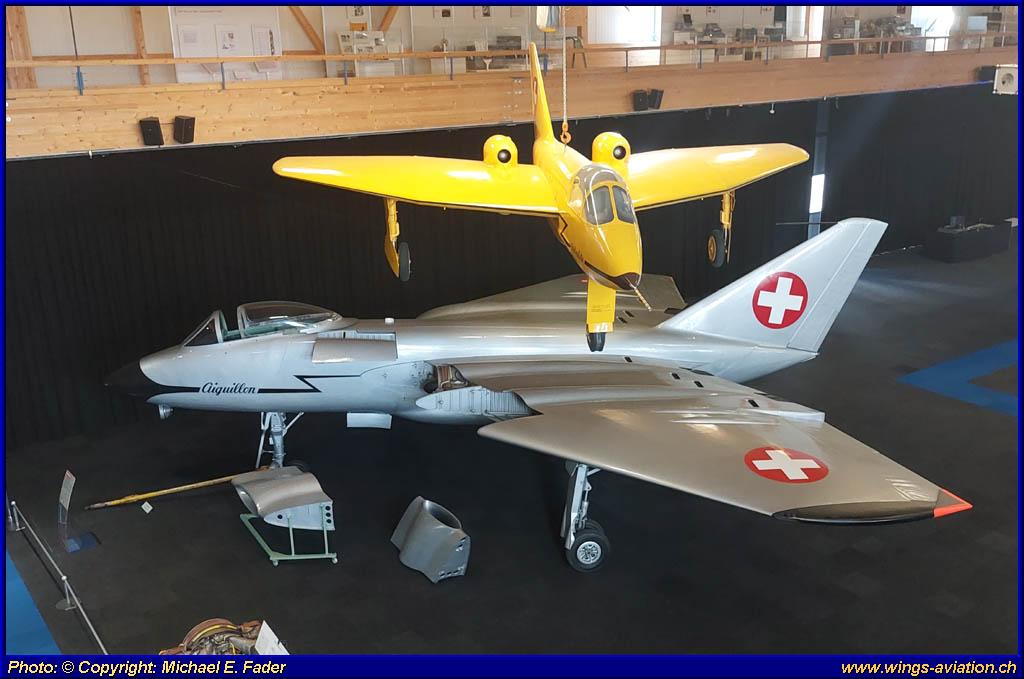


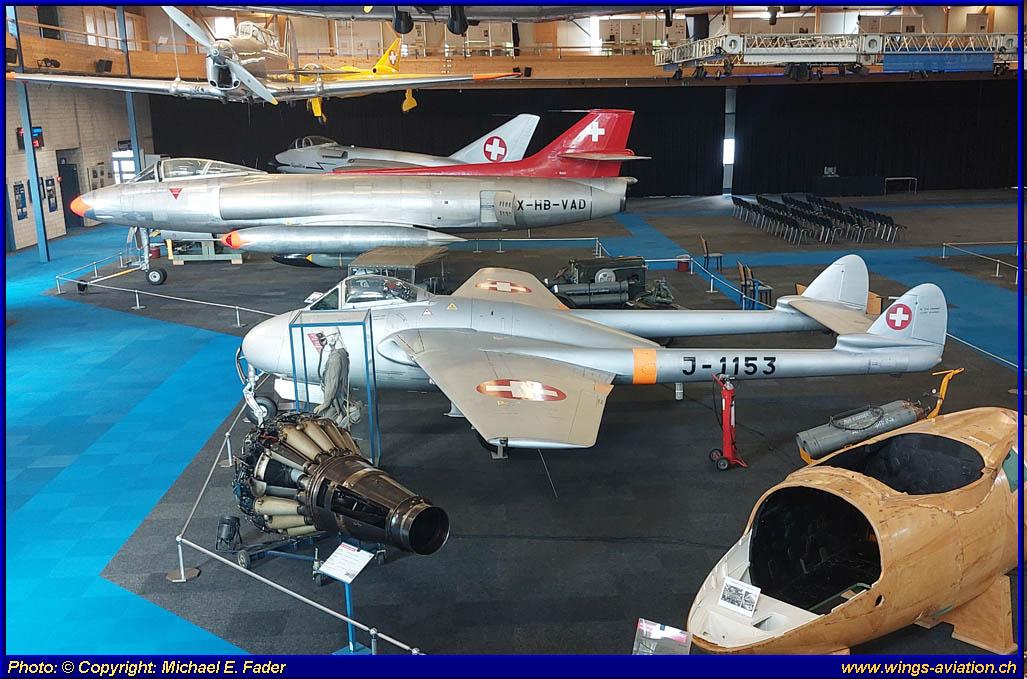
N-20.10 Aiguillon (Picture courtesy Michael E. Fader)
FFA P-16 (Picture courtesy Michael E. Fader)
FFA P-16 (Picture courtesy Michael E. Fader)
FFA P-16 (Picture courtesy Michael E. Fader)
The Cold War & Disarmament
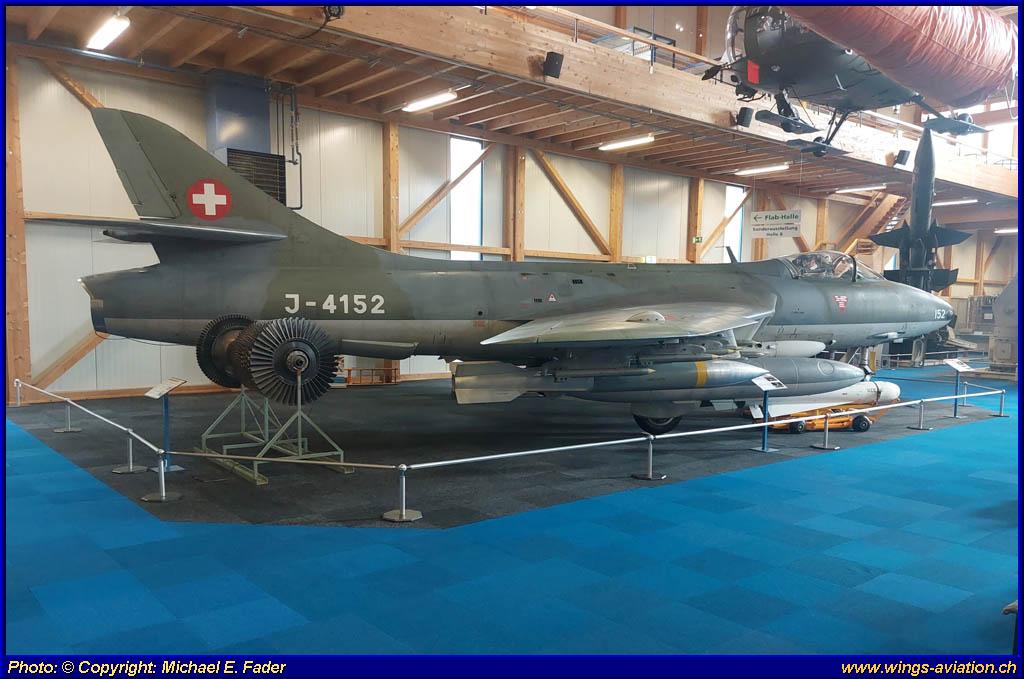
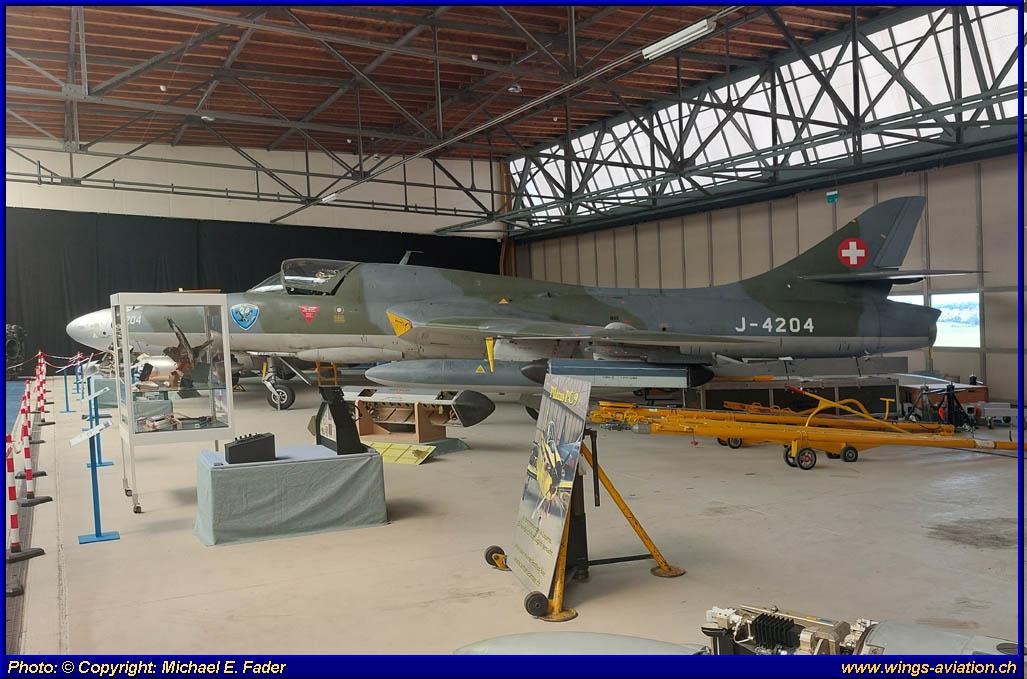
During the Cold War, the Swiss Air Force initially relied on four main types of aircraft: the De Havilland DH.100 Vampire, the De Havilland DH.112 Venom, the Hawker Hunter and, as its most capable fighter, the Mach 2-capable Dassault Mirage III. However, there is currently no Venom on display at the museum. Later, the Northrop F-5E Tiger joined the fleet as an air defence fighter. Some F-5Es are still in service with the Swiss Air Force today, though their replacement is now on the horizon.
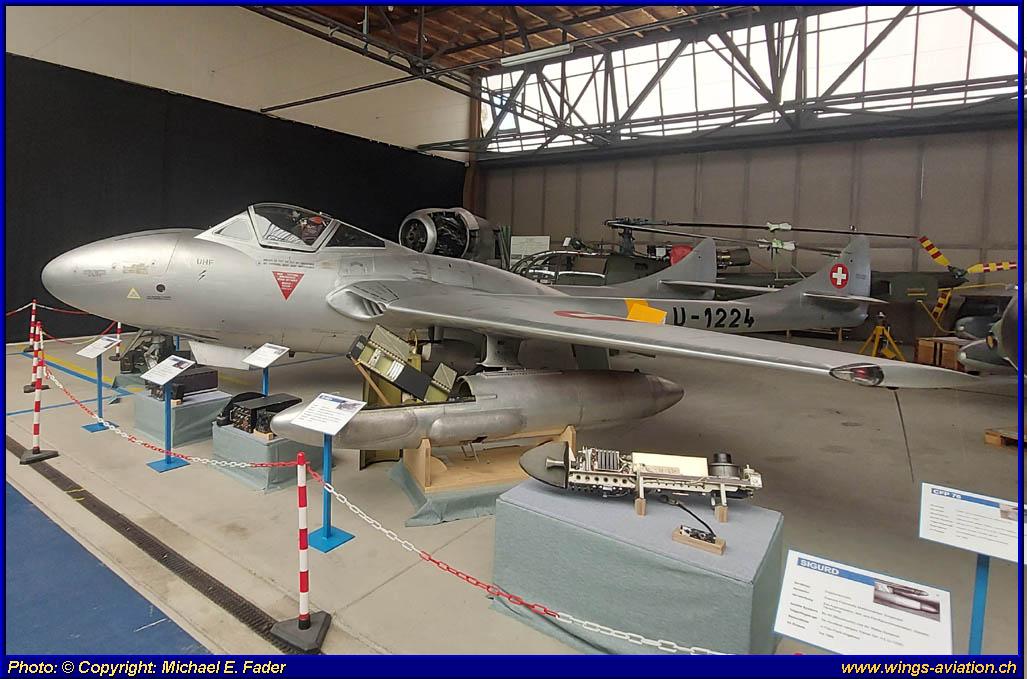


De Havilland DH-115 Vampire (Picture courtesy Michael E. Fader)
De Havilland DH.100 Vampire (Picture courtesy Michael E. Fader)
De Havilland DH.100 Vampire (Picture courtesy Michael E. Fader)
Hawker Hunter F Mk. 58A
(Picture courtesy
Michael E. Fader)
Hawker Hunter T
Mk. 68
(Picture courtesy
Michael E. Fader)
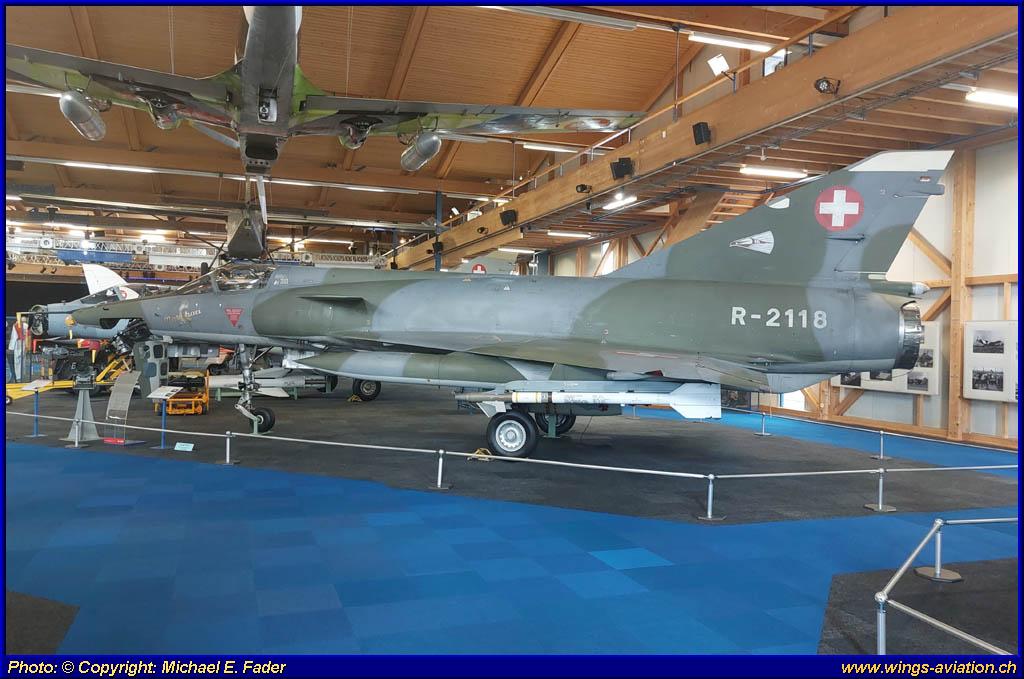

Dassault Mirage IIIRS (Picture courtesy Michael E. Fader)
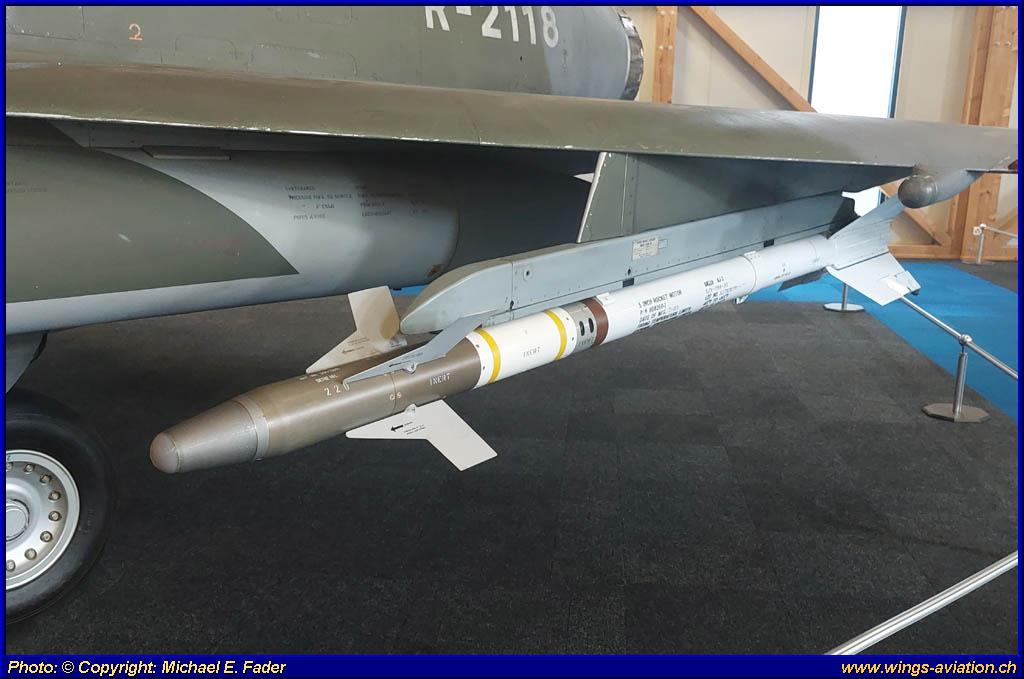
AIM-9 Sidewinder (Picture courtesy Michael E. Fader)
Dassault Mirage IIIRS (Picture courtesy Michael E. Fader)
Dassault Mirage IIIRS (Picture courtesy Michael E. Fader)
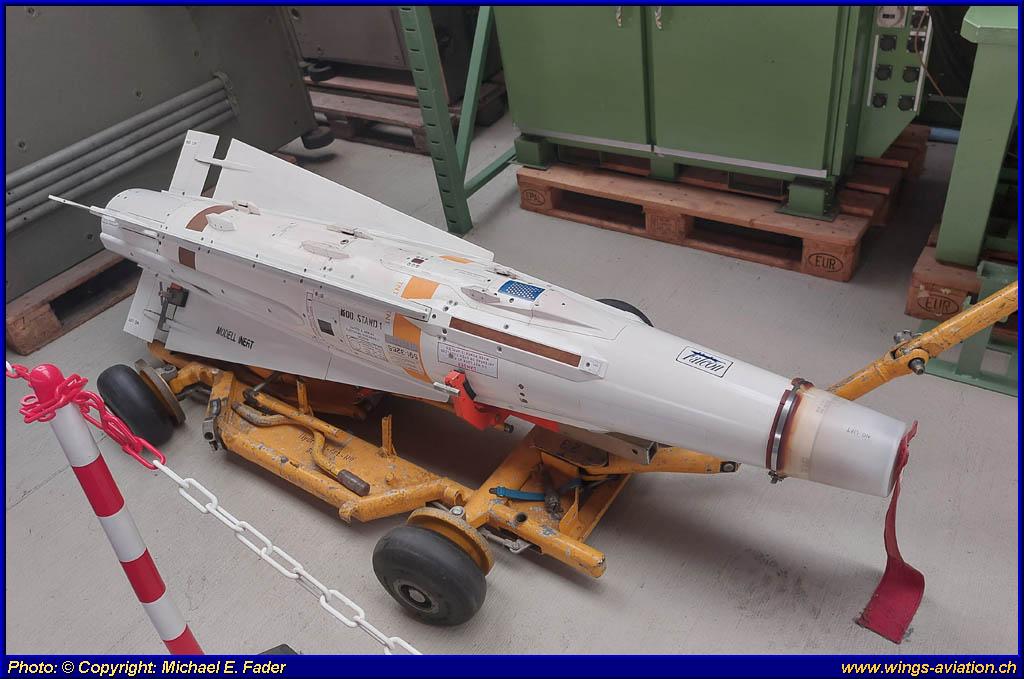
AIM-4 Falco (Picture courtesy Michael E. Fader)
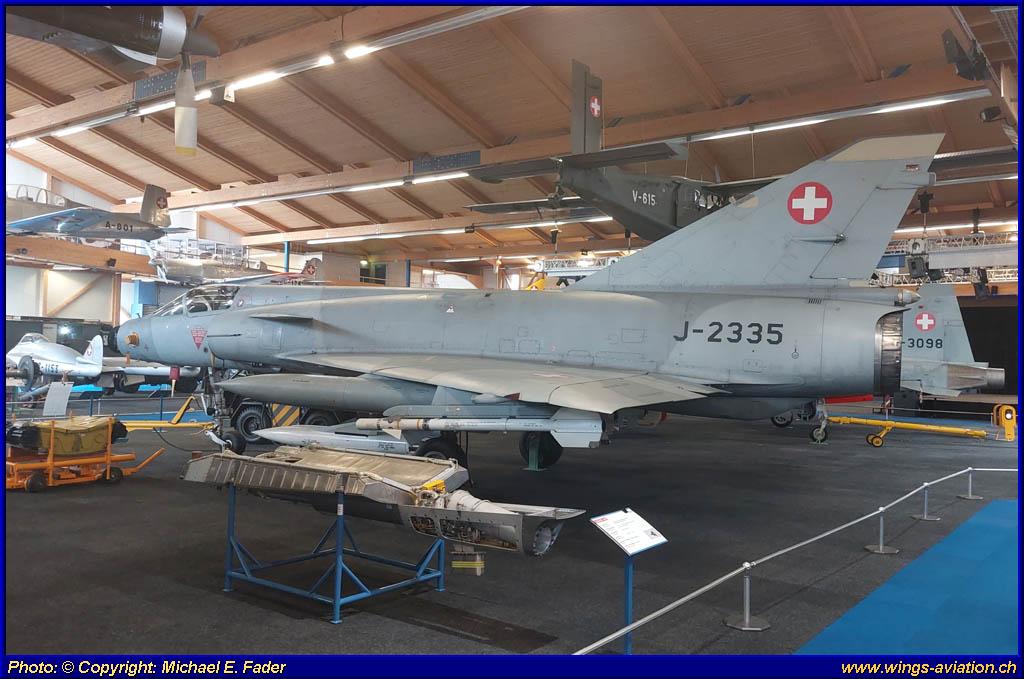
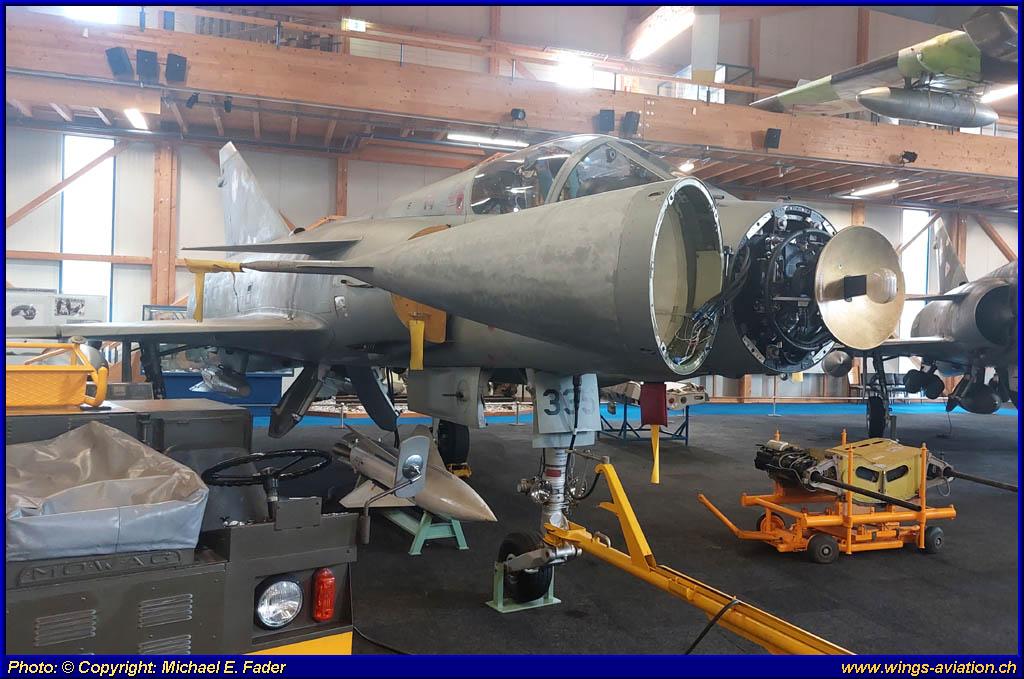
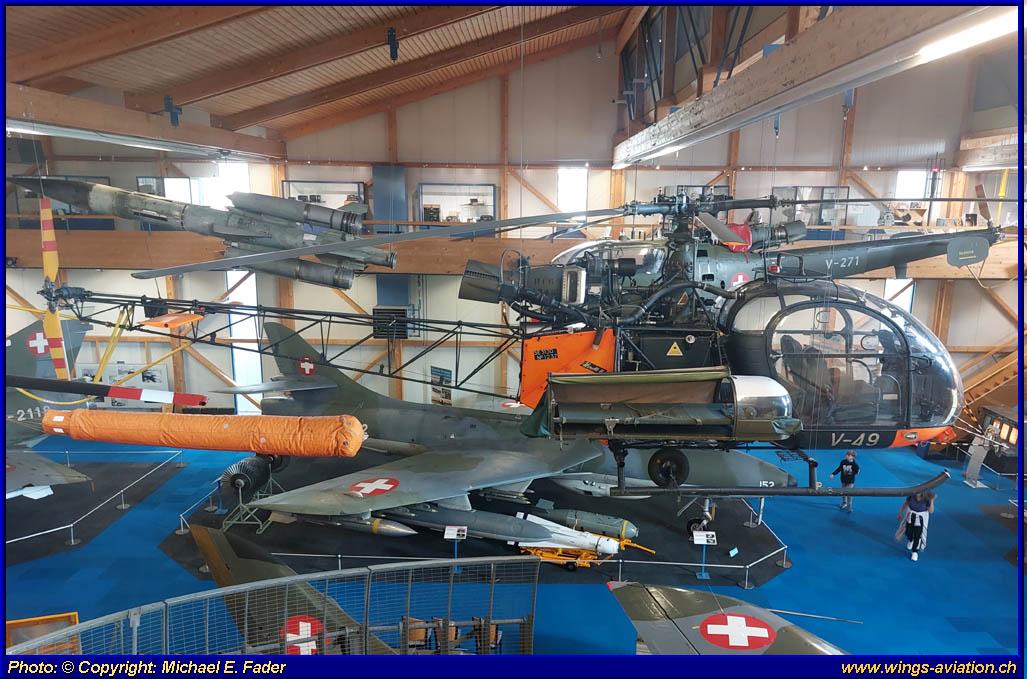
Dassault Mirage IIIS (Picture courtesy Michael E. Fader)
Dassault Mirage IIIS (Picture courtesy Michael E. Fader)
Northrop F-5E Tiger
(Picture courtesy
Michael E. Fader)
Northrop F-5F Tiger
(Picture courtesy
Michael E. Fader)
Süd Aviation Alouette II (Picture courtesy Michael E. Fader)

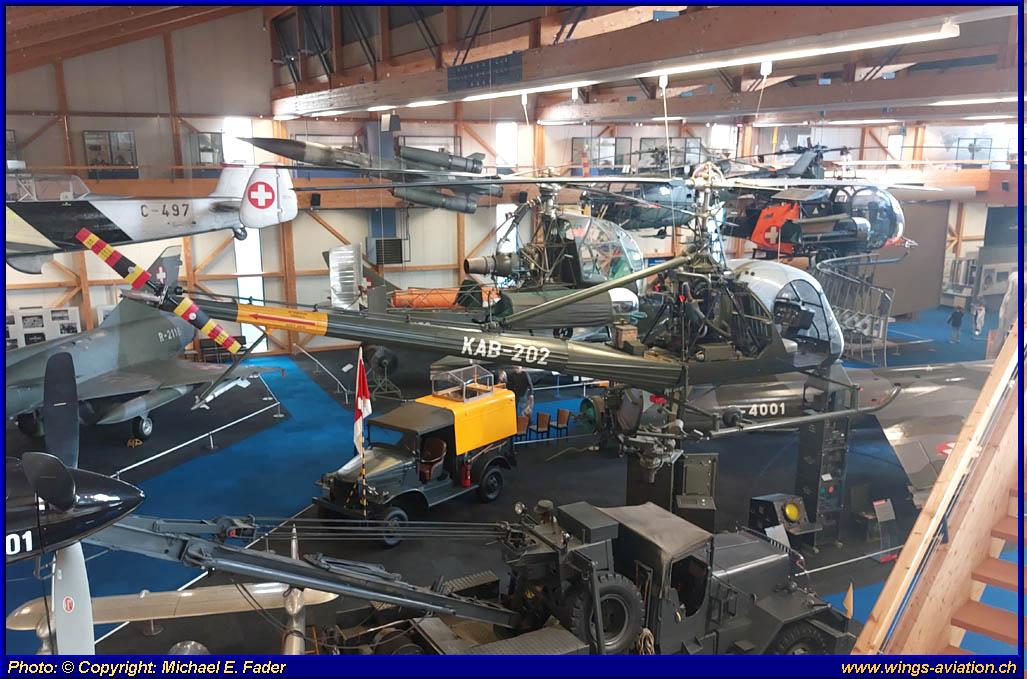
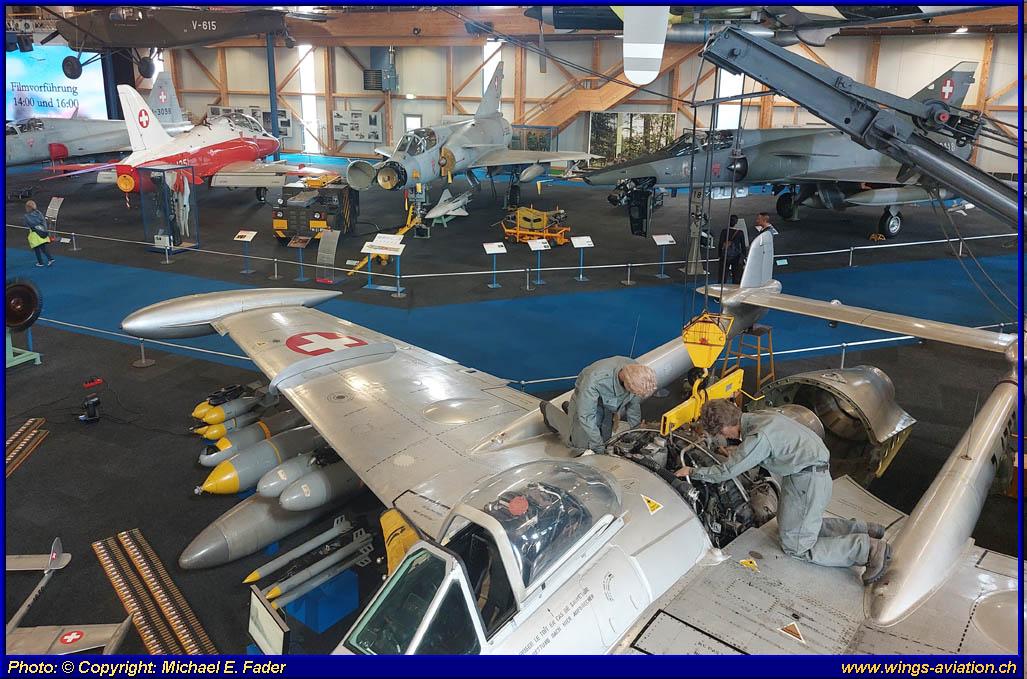
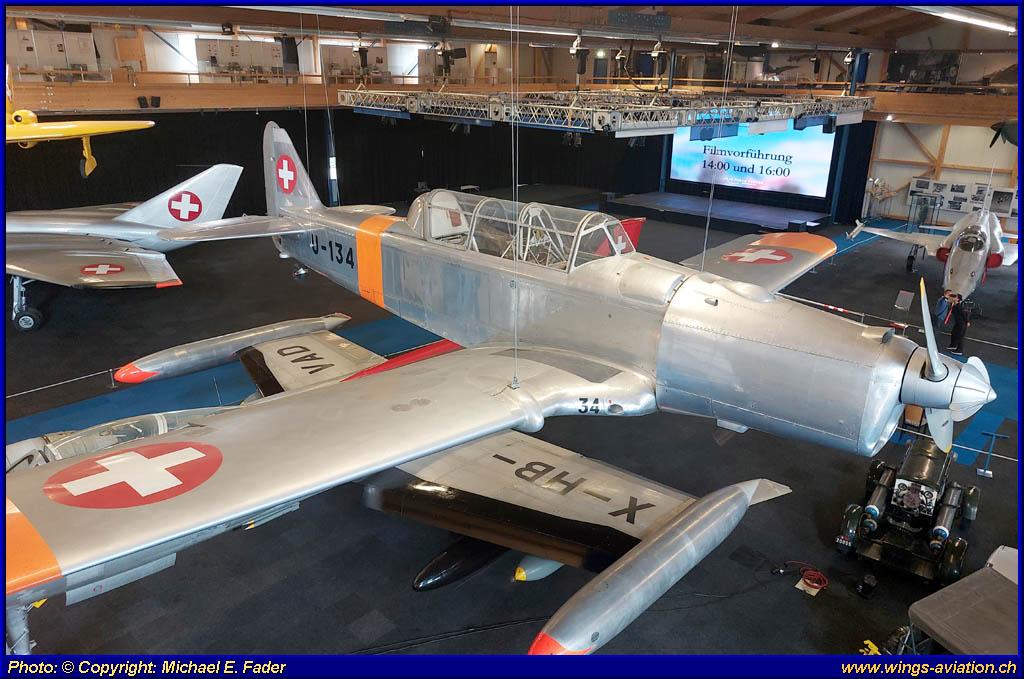

Süd Aviation Alouette III (Picture courtesy Michael E. Fader)
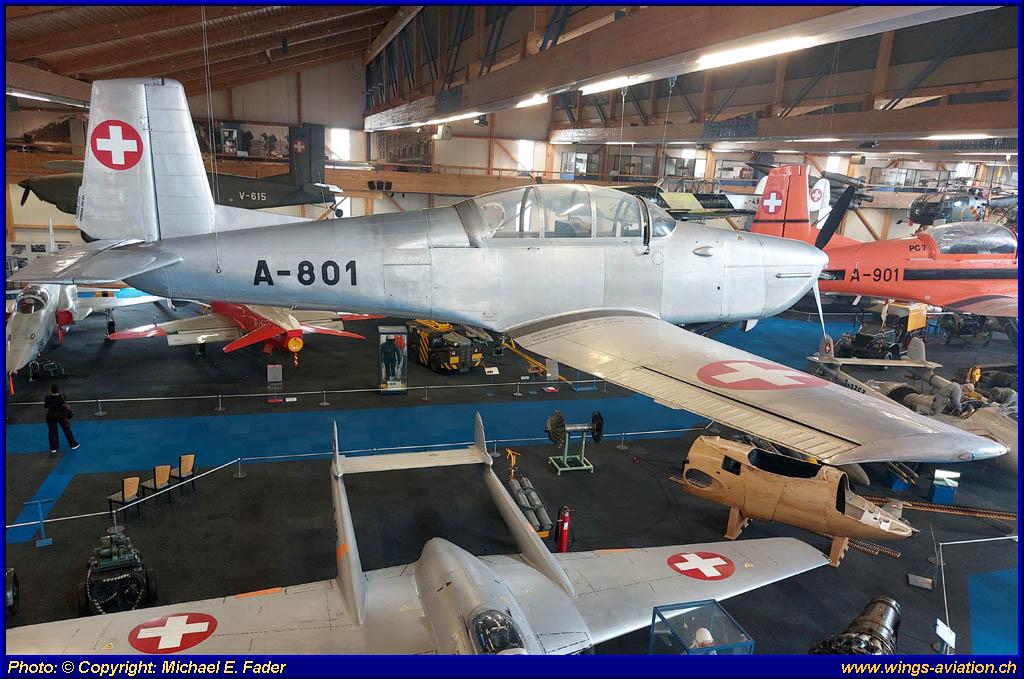

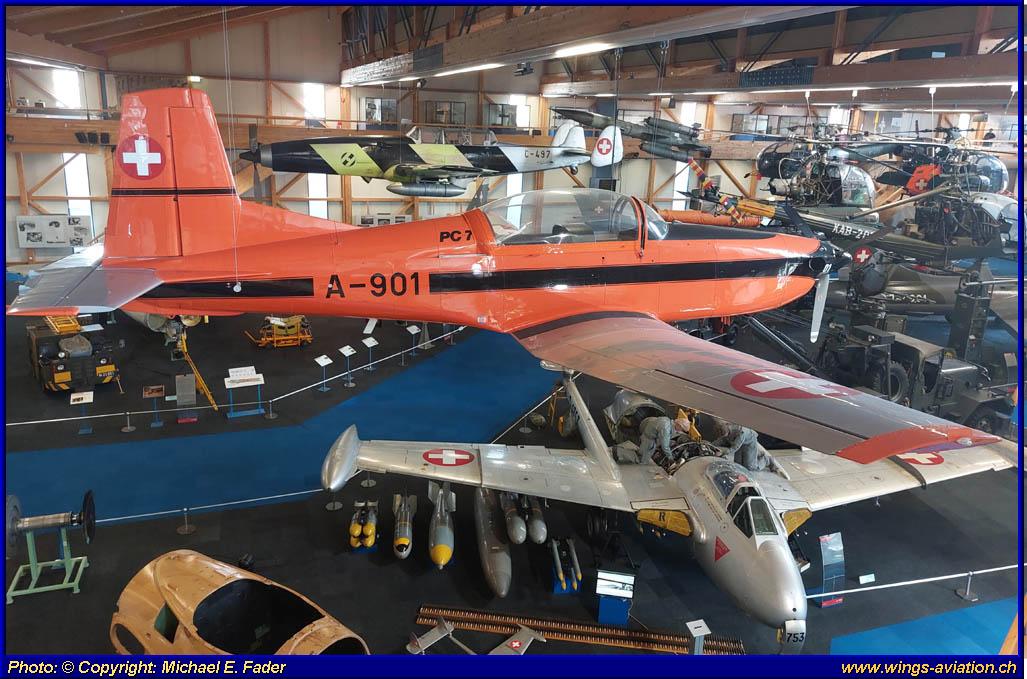
Pilatus P-3 (Picture courtesy Michael E. Fader)
BAE Hawk T Mk. 66
(Picture courtesy
Michael E. Fader)
BAE Hawk T Mk. 66
(Picture courtesy
Michael E. Fader)


